

Greece Has More Coastline Than You Think, and Most of It Stays Empty
Why the Famous Beaches Are Worth Skipping
Santorini’s Red Beach looks stunning in photographs. In July, however, you share it with roughly two thousand other people. The same applies to Navagio on Zakynthos, Elafonisi on Crete, and nearly every stretch of sand that lands on a “must-visit” list. Greece has over 16,000 kilometres of coastline. The beaches on those lists represent a fraction of a fraction of what actually exists.
This post focuses on the coastline that the algorithm skips. Some of these beaches require a boat, a long walk, or a willingness to navigate a dirt road without GPS signal. Most have no sunbeds, no beach bars, and no crowds. That is, of course, both the appeal and the limitation. Knowing what you are getting into before you go makes the difference between a great day and a frustrating one.
How to Use This Guide
Each section below covers a specific beach or small stretch of coast. You will find honest notes on how to get there, when to go, what to bring, and what does not work well. None of these beaches are completely unknown, but none of them appear on any mainstream top-ten list. Furthermore, conditions change seasonally, so always verify access before you travel. The best months for most of these spots run from late May through early June and again in September, when the water stays warm but the peak-season crowds have not yet arrived or have already left.
- Gialiskari Beach, Lefkada: the quieter neighbour of Porto Katsiki
- Fokianos Beach, Peloponnese: a long walk for a long reward
- Sykia Cave Beach, Milos: when a cave becomes a lagoon
- Seitan Limania, Crete: the beach that photographs lie about
- Dafni Beach, Zakynthos: loggerhead turtles and near-total silence
- Komos Beach, Crete: sand dunes in a country famous for rock
- Agios Georgios, Antiparos: the south end that nobody reaches
- West of Plakias, Crete: three coves with almost no visitors
- The Strofades Islands, Ionian: almost nobody gets here
- Livadaki Beach, Serifos: a long descent and total isolation
- Practical advice for reaching remote Greek beaches
Gialiskari Beach, Lefkada: the Quieter Neighbour of Porto Katsiki
Getting There Without the Queue
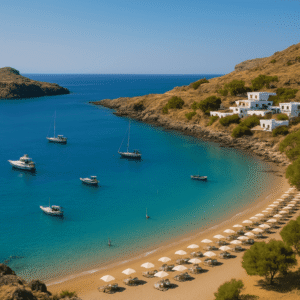
Porto Katsiki regularly tops lists of the most beautiful beaches in Europe. Consequently, it also gets extremely busy from late June through August. Gialiskari sits about 1.5 kilometres north along the same cliff-backed stretch of Lefkada’s west coast. The water colour is identical: an almost unreal turquoise against white limestone cliffs. The difference is that Gialiskari attracts perhaps thirty people on a busy day, while Porto Katsiki fills with tour buses by 10am.
To reach Gialiskari, you drive south from Athani village on the same road that leads to Porto Katsiki. Before the main car park, a rough track branches left and drops steeply toward a small cove. Most hire car agreements technically prohibit driving on unpaved roads, which is a real limitation. The alternative is to walk south from Porto Katsiki along the cliff edge for around twenty minutes. The path is unmarked and involves some scrambling over rock. Bring proper footwear rather than flip-flops.
What to Expect When You Arrive
The beach itself consists of large, smooth pebbles rather than sand. Flat-soled water shoes make a significant difference to your comfort. There are no facilities at all: no toilets, no fresh water, no food, and no shade except the cliff shadow in the morning. The sea floor drops away quickly, so strong swimmers will enjoy it more than young children will. In June and September, the water temperature sits comfortably around 22 to 24 degrees Celsius. Bring everything you need for a full day, including more water than you think you require.
Lefkada connects to the mainland by a short causeway, which makes it one of the easiest Ionian islands to reach without taking a ferry. If you travel as a family with young children, our Europe road trip with a baby planning guide covers the logistics of driving through Greece with a small child, including car seat rules and rest stop strategies.
Fokianos Beach, Peloponnese: a Long Walk for a Long Reward
The Trail Down from the Road
The Mani peninsula in the southern Peloponnese contains some of the most striking coastal scenery in Greece. Most visitors stop at Stoupa or drive through to Vathia for the tower houses. Fokianos sits on the eastern coast of the Mani, facing the Laconian Gulf, and requires a 45-minute walk down a rocky goat track from the nearest road. Google Maps shows the general area but the path itself does not appear on any digital map. Locals in the village of Thalames can point you in the right direction.
The track descends through dry scrubland, passing old stone walls and the occasional abandoned olive grove. In summer, this walk in full sun feels genuinely demanding. Starting before 9am makes it manageable. The beach at the bottom stretches for about 200 metres of fine grey shingle, with clear water and a rocky headland at each end. A small freshwater spring trickles near the northern end, though the water is not safe to drink without treatment.
Honest Notes on Limitations
The return walk uphill in afternoon heat is hard work. Anyone with knee problems or limited mobility should consider this carefully. The beach offers no shade whatsoever. Additionally, the water has a mild current running along the shore, which makes it less suitable for very young swimmers. Nevertheless, for adults and older teenagers who enjoy a destination that genuinely rewards effort, Fokianos delivers something rare: a long stretch of beautiful coast with almost no other people on it.
The nearest accommodation sits in Stoupa, about 25 kilometres north, where several small family hotels charge between 60 and 100 euros per night in shoulder season. Taverna Dioskouri in Stoupa serves good fresh fish at fair prices, roughly 12 to 18 euros for a main course.
Sykia Cave Beach, Milos: When a Cave Becomes a Lagoon
A Sea Cave With a Beach Inside
Milos has a reputation for extraordinary geology, and Sykia delivers on that reputation in an unusual way. A partially collapsed sea cave on the island’s south coast has created a circular lagoon entirely enclosed by rock walls, open only to the sky above and to the sea through a low tunnel. At the right time of day, sunlight falls directly down into the cavity and turns the water a vivid green. The beach inside the cave is small: perhaps 15 metres of sand, maximum.
You can only reach Sykia by boat. Several operators in Adamas and Pollonia run day trips that include Sykia as part of a longer coastal tour. Captain Nikos Tours in Adamas charges approximately 45 euros per adult for a half-day route that covers Sykia and two other sea caves. Booking in advance during July and August is essential. The boat enters the cave through the tunnel at low speed. Passengers with claustrophobia sometimes find this entrance uncomfortable, which is worth knowing before you commit to the trip.
Timing and Practicalities
The light inside the cave looks best between 11am and 1pm when the sun sits high enough to illuminate the water directly. Morning tours therefore tend to offer better photography conditions. The water inside is calm and relatively shallow near the beach, making it suitable for confident child swimmers. However, the boat access means you stay for a fixed time rather than the whole day. Most operators allow around 30 to 40 minutes inside before moving on.
Milos itself deserves several days of exploration beyond the cave. The island’s volcanic rock creates an extraordinary variety of coastal formations, and the fishing village of Klima, with its painted boat garages, is worth an evening walk. For visitors interested in the wave conditions along Greek island coastlines, our guide to surfing in Greece explains which islands generate the best swell and when.
Seitan Limania, Crete: the Beach That Photographs Lie About
What the Images Do Not Show
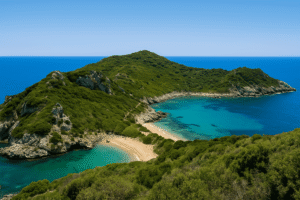
Seitan Limania in northwestern Crete photographs beautifully. The narrow inlet cuts between pale limestone walls, and the water runs through shades of blue and green that seem implausible. Social media has made this spot increasingly popular. However, the photographs consistently omit two things: the terrifying access road and the complete absence of space once you arrive.
The road down from the main highway to Akrotiri is unpaved, extremely narrow, and steep enough that cars frequently scrape their undersides on the rock. Several sections have sheer drops with no barrier. Many rental car companies specifically exclude this road from their coverage, and a car stuck or damaged here creates a serious problem in a location with no phone signal. If you drive, a high-clearance vehicle makes a meaningful difference.
Going in May or September Changes Everything
In July and August, the tiny strip of shingle at the bottom fills with 200 people. The water becomes crowded. The vibe shifts entirely from remote escape to awkward proximity. In late May or September, however, you might share the inlet with ten to twenty people at most. The water temperature remains above 20 degrees Celsius throughout September. The colours are if anything more vivid on overcast days when the sky provides a neutral background.
The honest verdict: Seitan Limania is worth visiting in shoulder season for adults who can handle the access road without anxiety. It does not suit families with young children or anyone who expects peace in peak summer. The nearest proper facilities sit back up at Stavros, a small village with a couple of cafes and a flat sandy beach that works much better for families.
Dafni Beach, Zakynthos: Loggerhead Turtles and Near-Total Silence
A Protected Bay That Rules Its Own Visitors
Zakynthos hosts one of the most important loggerhead sea turtle nesting sites in the Mediterranean. Laganas Bay receives most of the conservation attention and most of the tourists. Dafni, a quieter nesting beach on the southern coast, operates under strict access rules that actually work in the visitor’s favour. The National Marine Park of Zakynthos limits the number of people on the beach at any one time and prohibits sunbeds, umbrellas, and noise after dusk. As a result, Dafni feels genuinely calm in a way that Laganas does not.
A small boat service runs from Laganas to Dafni between June and September. The crossing takes about ten minutes and costs around 5 euros each way. Alternatively, a marked path runs along the coast from the eastern end of Laganas Beach, taking roughly 40 minutes on foot. The park rangers on the beach are knowledgeable and generally happy to explain the turtle nesting cycle to visitors who ask.
Turtle Spotting: Managing Expectations
Seeing turtles from the beach in daylight is not guaranteed. Females come ashore to nest at night, and the park closes the beach to visitors after sunset. Your best chance of spotting a turtle in the water comes during a snorkel in the bay, particularly in the early morning before the day-trip boats arrive. The sea floor near the rocks at the eastern end of the beach supports good populations of sea grass where turtles feed. Bring your own snorkel gear. No rental equipment is available on the beach itself.
The sand at Dafni is soft and the slope into the water is gentle, which makes it one of the more accessible remote beaches in this list for families with young children. The absence of beach bars means bringing your own food and drink, but the trade-off is a beach that actually feels like a natural place rather than a commercial operation.
Komos Beach, Crete: Sand Dunes in a Country Famous for Rock
The Beach at the End of the Minoan Road
Southern Crete surprises visitors in several ways. Komos surprises them with sand dunes. The beach stretches for nearly three kilometres south of the village of Kalamaki, forming the longest uninterrupted sandy shore on the island’s southern coast. Behind the beach, low dunes support a rare ecosystem of sea daffodils and dune grasses. The area also contains the ruins of a Minoan harbour town, partially excavated and freely visible from the beach path.
Access is simple compared to most beaches in this list. You park in Kalamaki and walk south along the coast path for about 20 minutes to reach the quieter northern end of Komos, or continue for another 30 minutes to reach the truly empty southern end where almost nobody goes. The southern stretch borders a protected loggerhead turtle nesting zone, so walking on the upper beach near the dunes is restricted between June and August. Rangers mark the restricted zones clearly.
Practical Notes on the Southern End
The southern end of Komos has no facilities and often no other people. The water is clear and relatively shallow, with a gradual slope suitable for children. However, the south coast of Crete frequently generates afternoon winds from June onward, and Komos faces these winds directly. Mornings tend to be calm, afternoons can be quite windy. Planning your beach time around the morning hours gives you the best conditions.
Taverna Komos, at the northern end of the beach, serves grilled fish and local dishes at reasonable prices, around 10 to 15 euros for a main course. The taverna closes in October and does not reopen until late April. The nearest town with year-round accommodation is Matala, about 5 kilometres north, which has a good range of small hotels and apartments.
Agios Georgios, Antiparos: the South End That Nobody Reaches
A Ferry Ride Away from the Paros Crowds
Antiparos sits a short ferry ride from Paros, and many visitors treat it as a half-day trip to see the famous stalactite cave. The beach at Agios Georgios, on the island’s southern coast, stretches much further than most visitors realise. The northern end near the small harbour gets some traffic. The southern end, a 25-minute walk further along the sand, stays almost entirely empty throughout the season.
The ferry from Paros Pounda port to Antiparos takes about 10 minutes and runs frequently throughout the day. From the port on Antiparos, you can rent a scooter or take a taxi to Agios Georgios village, about 8 kilometres south. The village has a handful of small cafes and a couple of rooms-to-rent operations. Staying overnight on Antiparos transforms the experience entirely. Without the day-trip crowds, the evenings feel quiet and the mornings belong almost entirely to you.
What Makes the Southern End Special
The water at the southern end of Agios Georgios is exceptionally clear, even by Greek standards. The sand is fine, pale, and deep enough that it stays cool underfoot even in the midday heat. A rocky headland at the far southern end creates a sheltered corner that catches the morning sun but stays shaded by afternoon. In September, this corner of the beach is genuinely one of the most pleasant places in the Cyclades.
The honest limitation: Antiparos has limited accommodation options. Most visitors commute from Paros, which means the island empties in the evenings during peak season, and the quieter restaurants can feel quite lonely. However, for visitors who prefer the daytime beach experience over a lively nightlife scene, this suits perfectly well.
West of Plakias, Crete: Three Coves With Almost No Visitors
Walking the Coastal Path From the Village
Plakias sits on the south coast of Crete and attracts a steady number of visitors, many of them returning year after year. The main beach at Plakias itself gets busy. However, a coastal walking path runs west from the far end of Plakias beach, passing three small coves in the first two kilometres. Local Cretans use these coves, but international tourists rarely walk far enough to find them.
The first cove, about 15 minutes from the main beach, consists of rough shingle and offers no facilities, but the water is clear and the cliff above provides morning shade. The second, another ten minutes further, has a narrow strip of sand and a freshwater stream that trickles from the hillside, creating a small contrast of cool fresh water against the warm sea. The third and furthest cove requires a short descent over rocks and stays empty even in August.
Combining the Walk With a Taverna Stop
Plakias itself has several good eating options. Taverna Sofia on the main road through the village has a solid reputation for grilled meat and straightforward Cretan salads. Prices run between 10 and 18 euros for a main course. The Plakias Surf Club, despite its name, operates mainly as a beach bar and equipment rental service, and also offers paddleboard hire at around 15 euros per hour, which gives you a useful way to explore the coves from the water rather than on foot.
For families considering Crete as a base for a longer Greek island trip, note that the south coast offers noticeably less infrastructure than the north. Roads are slower, medical facilities are further away, and ferry connections are limited. These are real factors to weigh, particularly if you travel with very young children or anyone with specific medical needs. Our disabled-friendly Europe travel guide covers accessibility considerations for Greek island destinations in more detail.
The Strofades Islands, Ionian: Almost Nobody Gets Here
Two Islands and a Byzantine Monastery
The Strofades are two small islands that sit 37 nautical miles south of Zakynthos, in the open Ionian Sea. Together they cover less than 10 square kilometres. A Byzantine monastery, Pantokrator, stands on the larger island (Stamfani) and a monk lives there year-round, maintaining the building and the bird-ringing station. The beaches around both islands consist of pale sand and incredibly clear water. Almost no organised tourism reaches here at all.
Getting to the Strofades is genuinely difficult. No regular ferry service operates. Charter boats from Zakynthos occasionally include the islands as a longer day trip or overnight stop, but these do not run on a fixed schedule. The crossing takes between three and four hours each way, depending on conditions. The open Ionian can produce significant swell, and the trip is not suitable for anyone prone to seasickness. In July and August, the conditions tend to be calmer, but the logistical challenge remains.
Why the Difficulty Is Part of the Point
The Strofades sit on a major bird migration route, and in spring and autumn the islands host extraordinary concentrations of migrating birds. Birdwatchers who reach here sometimes describe it as one of the best migration watching sites in Europe. The monk, Paisios, has lived on the island for over two decades and occasionally invites visitors into the monastery for coffee. This is not a tourist experience in any normal sense. It requires planning, flexibility, and tolerance for genuine remoteness.
The beaches themselves, particularly on the smaller island of Arpia, are completely undeveloped. No facilities, no fresh water, no shade structures. You bring everything and take everything back with you. The reward is swimming in water so clear that the bottom at five metres depth looks like two metres. For experienced sailors or those willing to join a charter group, the Strofades deliver something that the packaged travel industry simply cannot replicate.
Livadaki Beach, Serifos: a Long Descent and Total Isolation
The Cyclades Without the Cyclades Price Tag
Serifos gets a fraction of the visitors that Mykonos or Santorini receives, which means prices remain lower and the atmosphere stays relaxed. The island’s best-known beach, Livadi, sits near the port and functions fine. Livadaki, about 3 kilometres north along the coast, requires a 40-minute walk on a rocky path and delivers an entirely different experience.
The path north from Livadi starts at the far end of the bay, climbs briefly over a small headland, then descends to a second bay before climbing again to reach Livadaki. The terrain involves some loose rock and the occasional steep section. Good walking shoes make this much easier. The beach at Livadaki is a wide arc of coarse sand, well sheltered from the prevailing northerly winds that affect most of the Cyclades from late June onward. The sheltered aspect makes it one of the calmest Cycladic beaches even when the meltemi blows.
Practical Notes on Staying in Serifos
Serifos connects to Athens via the Piraeus ferry, with crossings taking between two and four hours depending on the boat type. High-speed services cost around 40 to 50 euros each way. Slower conventional ferries run for around 20 to 25 euros and carry vehicles. The island has several small hotels and a number of apartment rentals concentrated around the port village of Livadi. Rates in shoulder season run between 55 and 90 euros per night for a basic double room.
Takis Taverna, on the port waterfront, serves reliable grilled fish and an unusually good version of the local cheese pie. The island’s chora, perched dramatically above the port, is worth an evening walk for the views and the small selection of bars clustered around the main square. Unlike many Cycladic islands, Serifos remains affordable for a full week’s stay rather than just a quick overnight stop.
Practical Advice for Reaching Remote Greek Beaches
What You Need to Bring Every Time
Remote Greek beaches share several common characteristics. Most have no fresh water. Many have no shade. Several require physical effort to reach. The following preparation applies to almost every beach in this list.
Bring at least two litres of water per person for a full day. Pack sun protection and reapply it regularly, because Greek summer sun at midday is genuinely intense. Water shoes improve your experience significantly on pebble beaches, which describes the majority of remote Greek coastline. A small first aid kit covers the more likely problems: cuts from rocks, jellyfish stings, and blisters from unexpected walking.
For families travelling with infants or very young toddlers, remote beaches require additional planning. Many of the beaches in this list are not suitable for very young children due to access difficulty, lack of shade, or water conditions. Our baby’s first flight guide covers the logistics of getting to Greece with an infant, and our notes on choosing the best travel stroller for varied terrain are relevant if you plan to explore beyond the beach itself.
Seasonal Timing Across All Destinations
The optimal window for most beaches in this list runs from late May through mid-June and again from mid-September through early October. In this window, water temperatures reach 21 to 24 degrees Celsius, which most people find very comfortable. Additionally, accommodation prices drop significantly, ferries still run on summer schedules, and the beaches carry a fraction of their peak-season population.
July and August remain viable for beaches that are genuinely difficult to reach, since the access barrier filters out most casual visitors. For beaches with easier access, the peak-season crowds often negate the point of going. Planning around the shoulder season therefore matters more for this category of beach than for any other type of Greek travel.
Greece rewards visitors who look past the obvious. Every one of the islands in this list has a top-ten beach that features in every travel magazine and a dozen more that appear on no list at all. The difference in experience between those two categories grows wider every year as social media routes more and more people to the same small set of coordinates. Finding the second category takes more effort. It requires checking ferry timetables, asking locals rather than consulting apps, and accepting that sometimes the path is harder than expected. In almost every case, that effort returns something that a sunbed on a branded beach simply cannot offer: the feeling of having found a stretch of coast that feels, at least for the hours you spend on it, entirely your own.


Leave A Reply