

10 Towns in the Netherlands That Are Better Than Amsterdam (and Far Less Crowded
Amsterdam is genuinely wonderful. However, it has also become one of the most overcrowded tourist destinations in Europe. Hotel prices have climbed sharply. The canal-side streets fill up by 9am in summer. Furthermore, the city itself has started discouraging mass tourism, running campaigns asking visitors to think twice before they book. That says something.
The good news is that the Netherlands packs more worthwhile towns per square kilometre than almost any other country. Moreover, most of them cost significantly less to visit, offer easier transport, and feel far more like real, lived-in places. These are towns where locals actually eat dinner at the restaurants and where the museums are not yet buried under queues.
This guide covers ten Dutch towns that consistently outperform Amsterdam for specific kinds of travel. Some suit families with young children. Others work well for couples, cyclists, history lovers, or anyone who just wants to walk without being shoulder-to-shoulder with a tour group. Additionally, several of these destinations connect easily to each other, making a road trip through the Netherlands genuinely rewarding rather than logistically painful.
Who This Guide Is For
This post is written for people who have either already seen Amsterdam or who want to skip it entirely and spend their Netherlands trip somewhere more interesting. It is also useful for families: several of these towns have infrastructure that Amsterdam’s cramped canal streets simply cannot offer. For example, Haarlem and Leiden handle pushchairs and travel strollers far more gracefully than Amsterdam’s cobbled, tourist-dense centre. If you are travelling with a baby or toddler, you may want to read our Best Travel Strollers Guide before you pack, since the terrain in Dutch towns varies considerably and the right stroller makes a real difference.
A Honest Note on Expectations
None of these towns are secret. Dutch people know them well, and some attract their own weekend crowds, particularly in July and August. However, even at peak times, they feel manageable compared to Amsterdam. Furthermore, several of them have almost no international tourist infrastructure at all, which means you will need basic Dutch or a translation app for some situations. This guide includes honest notes on limitations so you can plan accordingly rather than arrive surprised.
1. Haarlem: The Easiest Switch You Can Make
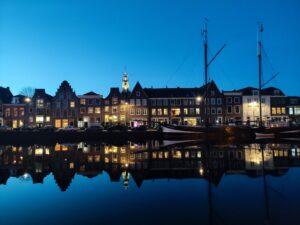
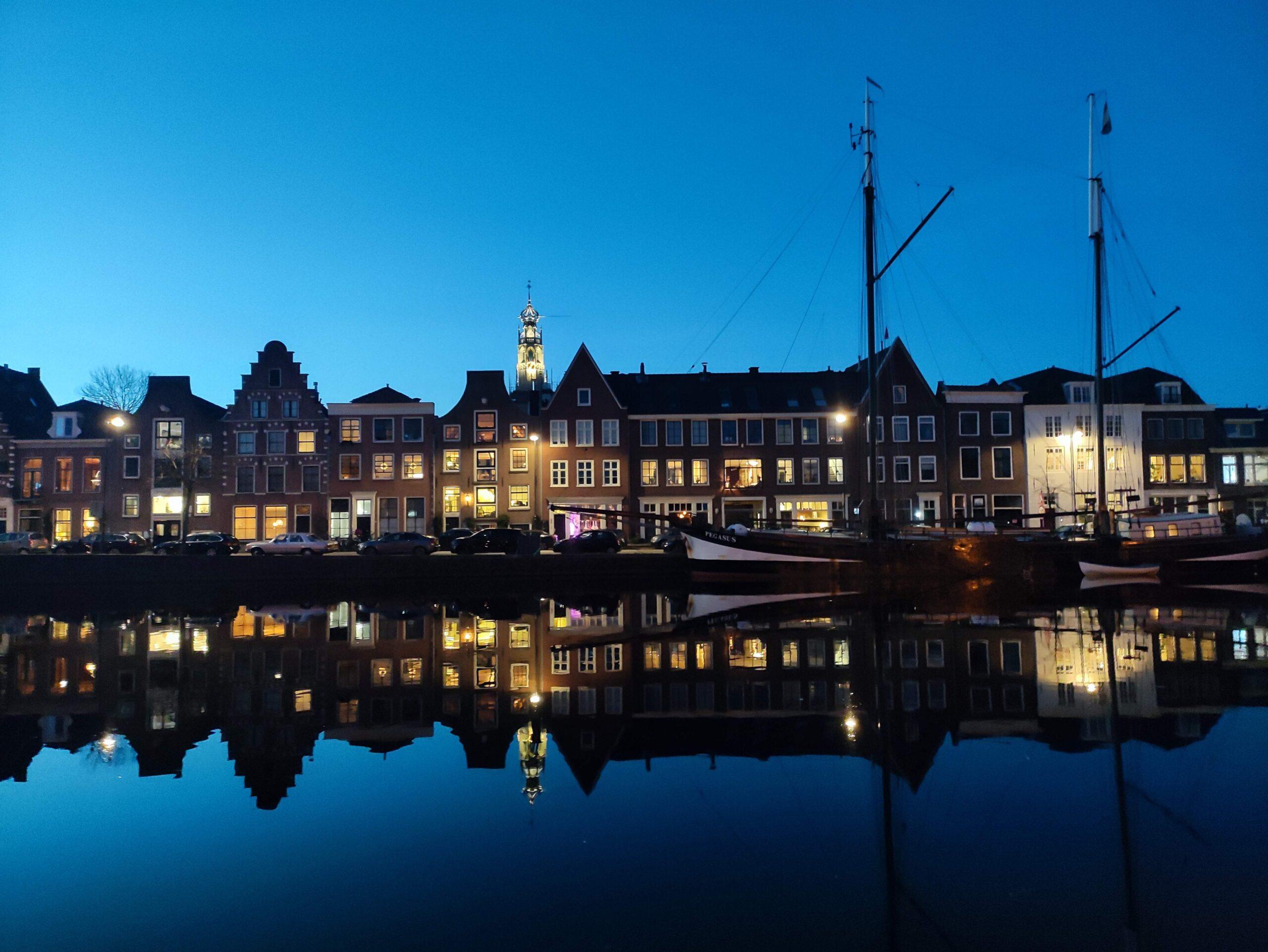
Haarlem sits 20 minutes west of Amsterdam by direct train, and the contrast is immediate. The central square, the Grote Markt, hosts a proper Saturday market where locals buy cheese and vegetables alongside tourists. The medieval church at its centre is enormous and genuinely atmospheric, without the entry queues you find at comparable Amsterdam landmarks.
The Frans Hals Museum holds one of the finest collections of Golden Age Dutch painting outside the Rijksmuseum. In fact, it holds several Hals group portraits that the Rijksmuseum would be proud to display. Entry costs around €20 for adults, which is broadly comparable to Amsterdam prices but without the two-hour advance booking requirement.
Haarlem for Families
Haarlem works particularly well for families. The streets around the centre are wider than Amsterdam’s canal-side paths, making it easier to navigate with a pushchair. Zandvoort, a North Sea beach town, sits just 15 minutes further west by train. The beach there is wide and flat, which matters when you have small children. However, Zandvoort itself is unremarkable as a town and the beach gets crowded in summer. Go early, bring your own food, and keep expectations realistic.
The Corrie ten Boom House, a museum dedicated to a Dutch family who hid Jewish people during the Nazi occupation, is one of the most moving small museums in the Netherlands. It suits older children and teenagers particularly well. Additionally, it is free, which makes it unusual among Dutch tourist attractions.
Where to Eat and Stay in Haarlem
Jacobus Pieck on Warmoesstraat is a reliable lunch spot with a good vegetarian menu and reasonable prices by Dutch standards. For coffee, ML on Grote Houtstraat serves genuinely good espresso and attracts a local crowd rather than a tourist one. For accommodation, the Stempels Hotel occupies a converted printing house and offers more character than most of the city’s options. It is not cheap, but Haarlem hotel prices generally run 20 to 30 percent below Amsterdam equivalents. Expect to pay around €140 to €180 per night for a decent room in peak summer.
2. Leiden: A University City That Actually Functions
Leiden is a genuine university city with around 120,000 residents, roughly 20,000 of whom are students. Consequently, the restaurant and café scene is better than towns of its size would normally support. The city also has a disproportionate number of excellent museums for somewhere this compact.
The Rijksmuseum van Oudheden holds the Netherlands’ principal archaeology collection, including an Egyptian temple that the Egyptian government gave to the Dutch state in the 1970s. It stands reconstructed inside the museum, which sounds odd but works remarkably well. Furthermore, the Natural History Museum and the National Museum of Ethnology both sit within easy walking distance. Leiden essentially gives you a museum district that rivals much larger cities.
Rembrandt’s Birthplace
Rembrandt van Rijn was born in Leiden in 1606. The city takes this seriously without turning it into a theme park. A walking trail marks the key sites, and the city’s own art holdings include several early Rembrandt works. In contrast to Amsterdam’s Rembrandt House, which attracts enormous queues, Leiden’s related sites are quiet almost year-round.
The canal system here is prettier than Amsterdam’s in some respects, particularly around the Rapenburg, which many Dutch architects consider the finest canal street in the country. Moreover, Leiden is compact enough that you can walk the entire historic centre in a morning without feeling rushed.
Practical Notes on Leiden
Leiden has a direct train from Amsterdam Centraal that takes around 35 minutes. The station sits slightly outside the historic centre, a 15-minute walk or short bus ride. For food, Oudt Leyden on Steenstraat is a historic pancake restaurant that has operated for decades and serves both savoury and sweet Dutch pancakes properly. It is touristy in the best sense: good food at fair prices. Additionally, Leiden’s Monday and Saturday markets on the Nieuwe Rijn are among the better general markets in the western Netherlands.
One limitation worth noting: Leiden’s museums keep relatively short opening hours, and several close on Mondays. Plan your day accordingly or you may arrive to a locked door.
3. Delft: More Than Just Blue Pottery
Delft has a reputation problem. Many visitors know it only as the home of blue-and-white pottery, arrive for two hours on a day trip from Amsterdam, buy a small tile, and leave. As a result, the town often gets dismissed as a tourist trap. This is unfair.
Delft is genuinely beautiful in a way that requires more than two hours to appreciate. The market square, the Markt, is one of the grandest in the Netherlands. The New Church, which holds the mausoleum of the Dutch royal family, sits at one end. The Old Church, which leans visibly due to its marshy foundations, sits nearby. Johannes Vermeer lived and worked in Delft his entire life, and the town treats this heritage thoughtfully rather than exploitatively.
The Real Delft Experience
The Royal Delft factory offers tours that are surprisingly interesting even if you have no particular interest in ceramics. The painting process is genuinely skilled and the tour explains why authentic Delftware costs what it does. However, skip the cheaper pottery shops around the market; most of them sell mass-produced items made in China. The Royal Delft label on a piece means it was actually made in Delft.
Delft also connects easily to The Hague, 15 minutes south by train. The Hague holds the Mauritshuis, a small museum containing Vermeer’s Girl with a Pearl Earring and several other major Dutch Golden Age works. It is significantly less crowded than the Rijksmuseum and far easier to visit without advance booking. If you base yourself in Delft, you can realistically visit both cities in one day.
Staying in Delft
The Hotel de Ark occupies a series of connected canal houses and provides a genuinely Dutch experience at mid-range prices. The breakfast is substantial and the location is close to the main sights without sitting directly on the tourist circuit. One honest warning: Delft gets noticeably busier on weekend afternoons from April through September. If you want the canal streets to yourself, visit on a weekday morning or in the early evening when day-trippers have left.
4. Utrecht: The City That Should Be More Famous
Utrecht is the Netherlands’ fourth largest city and arguably its most underrated. Around 360,000 people live here. The historic centre is large enough to hold several days’ worth of things to see, yet it never feels overwhelming. Furthermore, Utrecht sits at the exact centre of the Dutch rail network, which makes it one of the most accessible cities in the country.
The Dom Tower is the tallest church tower in the Netherlands and the guided tour to the top is excellent. What most visitors do not realise is that the tower and the cathedral nave are physically separated. A storm destroyed the connecting section in 1674 and the city never rebuilt it, leaving a gap between them in the middle of the square. The story of why this happened is more interesting than it sounds.
Utrecht’s Canal Culture
Utrecht’s canals differ from Amsterdam’s in an important way. The city built wharf cellars along the canal walls at water level, so restaurants and bars occupy this lower level with direct canal access. You can eat dinner essentially at water level while boats pass at eye height. Amsterdam has nothing comparable. This urban feature makes Utrecht’s canal area genuinely more pleasant for sitting outside than Amsterdam’s equivalent.
The Centraal Museum holds a strong collection spanning Utrecht’s history and Dutch art, including the world’s largest collection of works by Gerrit Rietveld, the furniture designer and architect who created the Red Blue Chair. The Rietveld Schröderhuis, just outside the centre, is a UNESCO World Heritage site and one of the finest examples of De Stijl architecture anywhere. Tours must be booked in advance, and they sell out, so plan ahead.
Food and Nightlife in Utrecht
Utrecht has a strong independent restaurant scene driven partly by its student population. Ledig Erf, a square in the southern canal district, fills with terrace bars from April through September and has a genuinely local atmosphere. For dinner, Restaurant Gys on Twijnstraat serves excellent modern Dutch cooking at prices well below comparable Amsterdam restaurants. Reservations are advisable on weekends. Additionally, Utrecht’s shopping streets, particularly Oudegracht and its side streets, contain a higher density of independent shops than almost any other Dutch city.
5. Gouda: Genuinely Good, Not Just Famous Cheese
Gouda’s cheese market, held on Thursday mornings from April through August, is theatrical and worth seeing once. Cheese porters in white costumes carry the rounds on wooden sledges while buyers and sellers perform a ritual hand-clapping negotiation. It looks staged because it partly is: the modern cheese trade happens in warehouses, not in town squares. However, the market itself is an honest re-enactment of a genuine tradition, and the cheese for sale is real and excellent.
Beyond cheese, Gouda holds what many experts consider the finest collection of stained glass in northern Europe. The St. Janskerk contains 72 windows, the oldest dating to the 16th century, spanning an extraordinary range of themes including both biblical scenes and political allegories. Light comes through them differently at different times of day, and the church is quiet enough that you can actually stand and look at individual windows in peace.
What Gouda Gets Wrong
Honest limitations matter here. Gouda is a small town and there is not enough to fill more than a day and a half, even for thorough visitors. The restaurant scene is thin outside of tourist-oriented spots around the market. Furthermore, Thursday morning cheese market days bring substantial crowds into a town that does not have the infrastructure to handle them comfortably. If you visit on a Thursday, arrive before 10am or after 1pm.
The Gouda Cheese Experience museum is reasonably well done but not worth the full entry price for adults who have any prior knowledge of cheese-making. The stroopwafel, however, is genuinely Gouda’s own invention and eating one fresh from a market stall, warm and slightly sticky, is worth doing at least once.
6. Middelburg: The Southwest That Most People Miss
Middelburg is the capital of Zeeland, the island province in the far southwest of the Netherlands. Most Dutch people know it well. Almost no international tourists visit, which makes it one of the most interesting destinations in this list.
The town centre is a near-perfect example of a medieval Dutch market town. The abbey complex, the Abdij, dominates the centre and contains several museums, a provincial government building, and two active churches. The town hall is arguably the most beautiful late-Gothic civic building in the Netherlands. Builders restored it after World War Two bombing destroyed much of it, and the restoration was done with unusual care.
Zeeland as a Region
Middelburg makes sense as a base for exploring Zeeland more broadly. The Delta Works, the enormous flood barrier system built after the catastrophic 1953 floods, sit nearby and the Watersnoodmuseum explains the disaster and the engineering response in considerable depth. Additionally, Zeeland has some of the best beaches in the Netherlands: wide, clean, and far less crowded than the North Sea beaches closer to Amsterdam and The Hague.
The coast around Domburg and Westkapelle draws Dutch surfers and has done for decades. If you are interested in surfing in northern Europe, the conditions here are modest but consistent. For reference, our surfing in Portugal guide covers better Atlantic swells if that is what you are after, but Zeeland offers something genuinely accessible for beginners who want their first experience in calm northern waters.
Travelling to Middelburg requires either a car or a train journey with at least one change. It is not difficult, but it takes longer than the towns closer to Amsterdam. Consequently, it suits people who plan to spend at least two nights in the area rather than day-trippers.
7. Maastricht: The Most Un-Dutch Dutch City
Maastricht sits in the narrow southern tip of the Netherlands, bordered by Belgium on one side and Germany on the other. The culture here is noticeably different from the north: the architecture has a Flemish and French quality, the food culture is stronger and more café-centred, and the city runs on a rhythm that feels southern European rather than Dutch Reformed.
The Vrijthof, the city’s main square, is one of the most pleasant public spaces in the Benelux region. Two large churches face each other across it. Dozens of terraces fill it from spring through autumn. On a warm evening, sitting on the Vrijthof with a local Limburgse beer feels genuinely civilised in a way that Amsterdam’s tourist-dense squares rarely do.
Maastricht’s Underground
The city sits on a sandstone ridge that centuries of quarrying have turned into an extraordinary underground labyrinth. The North Caves, beneath the Cannerberg hill, stretch for kilometres. Tours run regularly and go into caves that held resistance fighters during World War Two as well as artworks evacuated from Dutch museums for safekeeping. The experience is genuinely atmospheric rather than gimmicky.
Maastricht also hosts TEFAF, the world’s most prestigious art and antiques fair, every March. If you time a visit to coincide with it, the city fills with serious collectors and the energy is unique. However, accommodation becomes very expensive and very scarce during fair week, so book well in advance.
Getting to Maastricht
The direct train from Amsterdam takes around two and a half hours, which makes it too far for a day trip but perfectly reasonable for a two or three night stay. The train journey itself passes through some attractive countryside in the final hour. Additionally, Maastricht sits close enough to Aachen and Liège that combining it with a short Belgian or German detour is easy and rewarding.
8. Zwolle: The Overlooked East
Zwolle is the capital of Overijssel province and sits roughly in the centre-north of the Netherlands, about 90 minutes from Amsterdam by train. It receives almost no international tourism despite having a historic centre that competes with towns much more famous than itself.
The Sassenpoort, a 15th-century city gate, stands intact at the edge of the old centre and gives a sense of how fortified the city once was. The Grote Kerk dominates the main square and contains one of the finest organs in the Netherlands, regularly used for concerts. Furthermore, the city has an energetic independent shopping and food scene driven by its position as a regional hub for a large rural hinterland.
Why Zwolle Works for Families
Zwolle has good infrastructure for families with children. The Dinoland Zwolle theme park sits outside the city and caters to children under about 12 particularly well. The city itself has several parks and the canal walk around the historic centre is wide, flat, and easy to navigate with pushchairs. For families planning a longer Dutch road trip, Zwolle connects naturally with the Veluwe national park, which offers some of the best cycling and hiking in the Netherlands.
If you are planning a road trip through the Netherlands with young children, our Europe Road Trip with a Baby guide covers the practical preparation that makes the difference between an exhausting and an enjoyable journey. The Netherlands is actually one of the easier European countries for this kind of travel, and Zwolle makes a good overnight stop on an eastern route.
9. Deventer: A Medieval Town That Has Not Been Renovated to Death
Deventer sits on the IJssel river, about 20 minutes south of Zwolle by train. It contains the highest density of medieval architecture per square metre of any town in the Netherlands. Crucially, much of it is original rather than restored, which gives the town a texture that genuinely restored medieval centres sometimes lack.
The Brink, the main square, holds a Saturday market that operates on a scale impressive for a town of 100,000 people. The De Waag, a historic weigh house, sits at one end of the square and now houses a café where you can sit upstairs and look out over the whole market. The view on a busy Saturday morning, with stalls stretching across the cobbles, is one of the better free experiences in the eastern Netherlands.
Dickens in Deventer
Deventer hosts a Charles Dickens festival every December that transforms the historic centre into a Victorian Christmas scene. Around 950 costumed actors fill the streets, and the event draws around 100,000 visitors across a single weekend. It is extraordinary and worth planning a trip around specifically. However, book accommodation six months in advance; the town and surrounding area sell out completely.
Outside December, Deventer is quiet in the best sense. The riverside walk along the IJssel is excellent. The Speelgoedmuseum, a toy museum aimed at children but interesting to adults, occupies a historic building and has an unusually good collection of Dutch toys from the 19th and 20th centuries. Additionally, the Lebuïnuskerk is one of the larger Romanesque church interiors in the Netherlands and worth visiting even if you have little interest in religious architecture.
10. Enkhuizen: The Best Living History Museum in the Country
Enkhuizen sits on the IJsselmeer, the large inland lake that was once the Zuiderzee, about 50 minutes north of Amsterdam by train. In the 17th century it was one of the most important fishing ports in the world. Today it has a population of around 18,000 and a harbour full of old wooden boats.
The Zuiderzeemuseum is the reason to come. The outdoor section of the museum is an entire reconstructed fishing village, built from original buildings moved from sites around the former Zuiderzee. Around 130 historic buildings stand on the site, including houses, workshops, a school, a church, and working fishermen’s sheds. Staff in period costume demonstrate traditional crafts. Boats leave from the Enkhuizen train station directly to the museum’s waterside entrance, which itself feels like arriving somewhere from another century.
Honest Assessment of Enkhuizen
The Zuiderzeemuseum is the town’s main draw, and it is genuinely excellent. However, Enkhuizen itself has limited options for dining and accommodation beyond the basics. The town suits a long day trip from Amsterdam more than an overnight stay, unless you specifically want to stay in a small harbour town with little nightlife and a very early closing time for restaurants. For some travellers, particularly families with young children who find cities exhausting, that is a positive rather than a limitation.
The historic harbour area around the Drommedaris tower is worth an hour in itself. Several traditional sailing boats offer day trips on the IJsselmeer from Enkhuizen during summer, which is an experience genuinely different from anything available in Amsterdam. Additionally, the market on Wednesday mornings is small but authentic and attended almost entirely by local residents.
How to Plan a Route Through These Towns
The Netherlands is compact enough that you can combine several of these destinations efficiently. A western circuit might link Haarlem, Leiden, Delft, and Utrecht over four or five days. An eastern circuit suits Zwolle and Deventer together, with Enkhuizen as a day trip. Maastricht and Middelburg both work better as standalone destinations given their distance from the others.
The Dutch rail network connects all of these towns directly or with one change. Trains run frequently, usually every 15 to 30 minutes on main routes, and the NS app makes ticketing straightforward. Renting a car adds flexibility, particularly for Zeeland and the Veluwe region, but it is not necessary for most of this list. If you plan to drive with a baby or young child, our Europe road trip guide covers car seat requirements, rest stop planning, and the practical details that make a significant difference.
Accessibility Across These Towns
Accessibility varies considerably across this list. Utrecht and Leiden have modern, well-maintained public infrastructure with good wheelchair access in most of the historic centre. Deventer and Enkhuizen have more cobbled streets and fewer dropped kerbs, which creates real difficulties for wheelchair users and those with mobility challenges. Middelburg falls somewhere between the two. If accessibility is a priority for your trip, our Disabled-Friendly Europe Guide covers the specific considerations that apply to Dutch travel and includes honest assessments of which town types suit different mobility needs.
Travelling with Babies and Young Children
Several of these towns work particularly well for families with very young children. Haarlem, Leiden, and Utrecht all have modern rail connections, flat walking surfaces in the historic centre, and good access to baby-friendly facilities including family rooms in hotels and high chair availability in restaurants. Gouda and Enkhuizen are less well-equipped but manageable for a day trip. Maastricht’s café culture actually suits travelling with babies and toddlers rather well: the terraces are spacious, the pace is slower, and staff in family-oriented cafés tend to be accommodating.
If you are planning your first trip abroad with a very young baby, our Baby’s First Flight Guide covers the airport logistics that feel overwhelming the first time and become straightforward once you know the process. The Netherlands is a genuinely good country for first-time family travel: distances are short, infrastructure is reliable, and the culture is broadly tolerant and practical about children in public spaces.
What These Towns Have in Common
Every town on this list shares certain qualities that Amsterdam has partly lost. They have functioning local economies that do not depend entirely on tourism. Residents outnumber visitors on most days. The restaurants and cafés serve local customers, which means the quality has to justify itself rather than relying on footfall from people who will never return.
Furthermore, all of these towns connect to the wider Netherlands in ways that reward staying longer. A day in Haarlem leads naturally to Zandvoort beach. A day in Leiden opens into the Bollenstreek tulip fields in spring. A stay in Maastricht connects to Belgian beer culture and German Christmas markets depending on the season. The Netherlands rewards slow travel more than most visitors expect, and none of that slowness requires Amsterdam.
The country’s tourist board has spent decades directing visitors toward a single city while an extraordinary range of places waited quietly nearby. Many of them are still waiting. The towns on this list will not stay undiscovered indefinitely, but right now, in this particular window, they offer something genuinely rare in western European travel: places that are worth visiting and not yet exhausting to be in. Book the train, skip the queue for the Anne Frank House, and spend your time somewhere that is actually glad you came.


Leave A Reply