

Amsterdam Is One of the Best Cities in Europe for a Baby
People hear “Amsterdam with a baby” and they think of canal bridges, cobblestones, and bicycles coming from every direction. The concern is understandable. Amsterdam is a famously active, occasionally chaotic city. At first glance, it does not look like an obvious baby destination.
Look more carefully and a very different picture emerges. Amsterdam has more dedicated cycle paths than almost any city in Europe, and those paths double as smooth, flat, pram-friendly routes through the most beautiful parts of the city. The canal rings that seem like obstacles are lined with wide, level walkways that are genuinely wonderful for pushing a stroller. The Dutch attitude toward babies in public is warm and matter-of-fact: babies belong in cafés, restaurants, museums, and trams, and nobody makes you feel otherwise.
Furthermore, the city’s compact geography is one of its greatest assets for families. Almost every significant neighbourhood, museum, market, and waterway is within walking distance of the city centre. You are never far from a café with space for a pram, a park bench in the sun, or a quiet canal-side spot to sit and feed. Amsterdam rewards slow exploration, and slow exploration is exactly the pace that a baby imposes anyway.
This guide covers everything you need to plan an Amsterdam city break with a baby: the best neighbourhoods to base yourself, how to get around the city, which attractions work well with a baby in tow, where to eat and what to expect, and the specific practical details that experienced baby-travelling families have learned about this particular city.
Table of Contents
- Why Amsterdam Works So Well for Families with Babies
- Best Time to Visit Amsterdam with a Baby
- Best Neighbourhoods to Stay In
- Getting Around Amsterdam with a Baby
- Best Attractions for Families with Babies
- Parks and Outdoor Spaces
- Eating Out in Amsterdam with a Baby
- Practical Information
- Tips from Families Who Have Done It
- Frequently Asked Questions
1. Why Amsterdam Works So Well for Families with Babies
Several specific characteristics of Amsterdam combine to make it one of the best European cities for a trip with a baby. Understanding these helps you plan a visit that makes the most of what the city genuinely offers.
Pram-Friendly Infrastructure
Amsterdam’s cycle paths are the foundation of the city’s pram-friendly character. Wide, smooth, and clearly separated from both road and pedestrian traffic, these paths run through every significant neighbourhood and along every major canal route. Many families visiting Amsterdam with a baby use the cycle paths specifically as stroller routes, navigating the city along them rather than on the narrower and sometimes busier pavements. The result is a surprisingly relaxed and very pleasant way to move through a major European city.
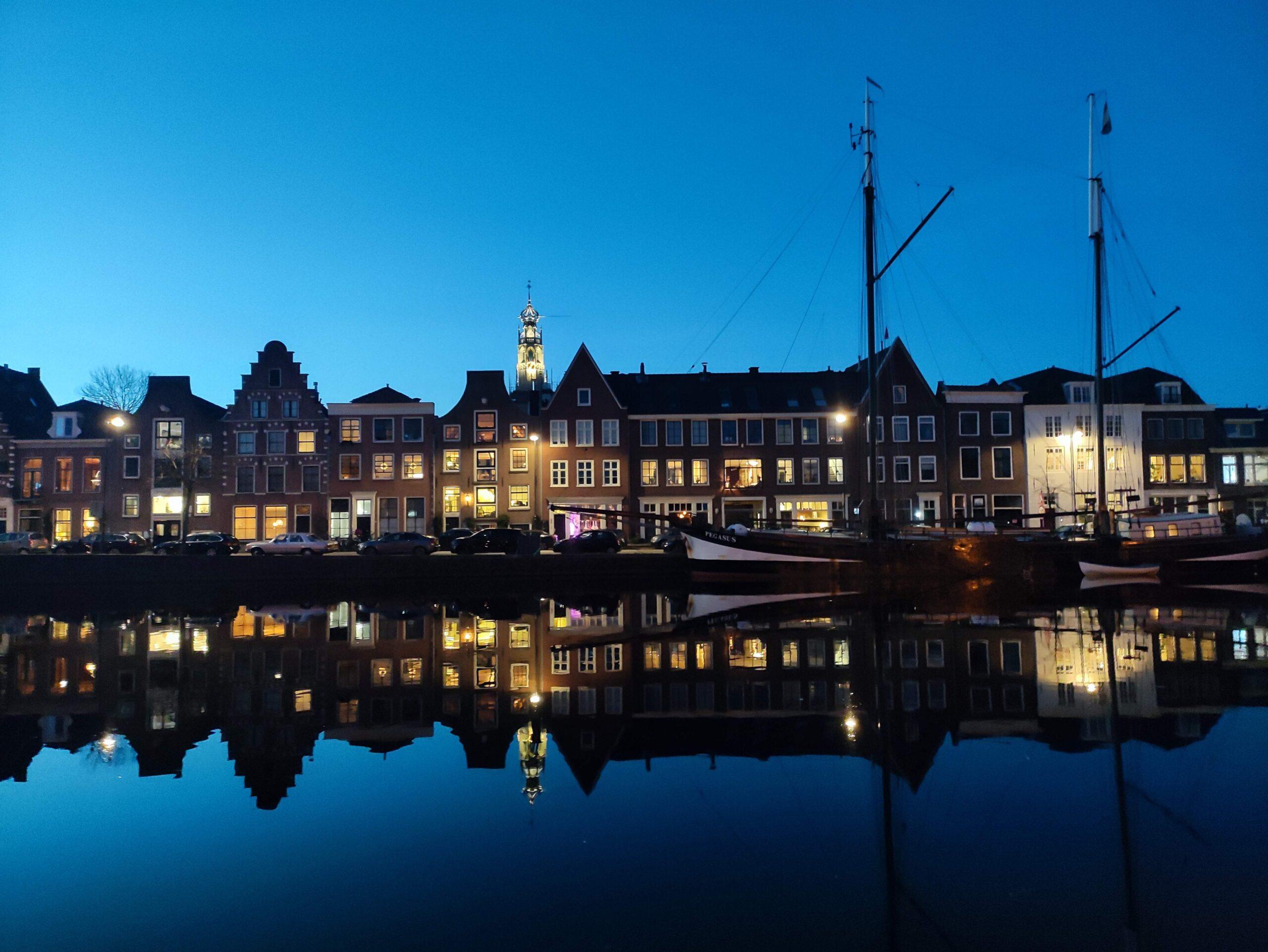
The canal-side walkways are similarly excellent. Running along both sides of the main canal rings, these flat, wide paths link neighbourhood to neighbourhood with minimal traffic and maximum scenery. Pushing a pram along the Prinsengracht or the Keizersgracht on a mild spring morning, with the canal light reflecting off the gabled facades, is one of the genuinely lovely Amsterdam experiences that happens to suit a baby perfectly.
The Dutch Attitude Toward Children
Dutch culture is notably relaxed and practical about children in public spaces. Babies and toddlers in restaurants, cafés, museums, and shops are entirely normal and universally accepted. Nobody raises an eyebrow. Highchairs appear without ceremony, and nursing mothers are unremarkable. The absence of social pressure around managing a baby in public removes a significant source of stress that parents sometimes encounter in other European cities.
Moreover, Amsterdam has a strong family population. It is a city where many people live and raise children rather than simply a tourist destination. As a result, its infrastructure reflects genuine family needs rather than a theoretical concession to tourism. Changing facilities, family bathrooms, and child-friendly restaurant menus exist because Amsterdam residents need them, not because tourism boards have mandated them.
Compact and Walkable Geography
Amsterdam’s historic centre fits within an area roughly four kilometres from west to east and three kilometres from north to south. Within this compact space, almost everything of interest to a visiting family is accessible on foot or by a short tram ride. No long commutes to attractions exist here. No exhausting navigation of a sprawling metropolitan area is required. You arrive in a neighbourhood, spend time there, and walk to the next one. Baby travel benefits enormously from this compactness.
2. Best Time to Visit Amsterdam with a Baby
Amsterdam is a year-round city, and each season has genuine merits. For families with babies, however, some periods are considerably more comfortable than others.
April and May
Late April and May represent the finest window for Amsterdam with a baby. The city’s famous tulip season peaks in mid-April. Keukenhof gardens south of the city are at their most spectacular at this time, and parks and canal sides are colourful and beautiful. Temperatures are mild, typically twelve to eighteen degrees. Rain is possible but not constant. Crowds are manageable outside of the King’s Day national holiday on 27 April, when the entire city erupts in celebration and streets become genuinely difficult to navigate with a pram.
May is particularly excellent. Tulips remain in parks and along canal sides well into the month. Outdoor time in parks becomes genuinely comfortable. Accommodation prices sit lower than in June through August, and the tourist season has not yet peaked. For families travelling from the UK, May long weekends offer a convenient entry point.
June and Early July
Early summer brings reliably warm weather and long days. The Amsterdam sunset in late June occurs after ten in the evening, which means outdoor time extends remarkably late. Temperatures are comfortable rather than hot, typically eighteen to twenty-three degrees. The city becomes busier in June and significantly busier in July, but it handles tourist volumes well due to its size and the distributed nature of its attractions across multiple neighbourhoods.
September
September is an excellent month that many experienced Amsterdam visitors prefer. Summer crowds thin after the Dutch school return in late August. Temperatures stay pleasant. Normal city rhythms return. Many of Amsterdam’s best restaurants, which coast through summer on tourist trade, return to their best form in September when the clientele becomes more local and more discerning.
Winter
Amsterdam in winter has genuine appeal if you dress appropriately and adjust expectations. Canal-side Christmas markets in December are beautiful. Museum season reaches its peak when outdoor activities are less appealing. Crowds drop considerably and accommodation prices follow. For families with babies for whom outdoor time is less central, winter Amsterdam offers real cultural richness at a fraction of the summer cost. Dutch warmth toward babies does not change with the weather, and café culture is at its most welcoming in cold months.
3. Best Neighbourhoods to Stay In
Amsterdam divides into distinct neighbourhoods with different characters. Choosing the right one as your base shapes the entire city break experience.
The Jordaan
The Jordaan is consistently the neighbourhood that families with babies find most satisfying as a base. Located immediately west of the central canal ring, it combines beautiful canal-side streets with a relaxed, village-like atmosphere that is markedly different from the busier tourist areas. Independent cafés, good restaurants, local shops, and small squares with benches and outdoor seating define the Jordaan’s street life. The neighbourhood is entirely flat and the streets are wide enough for pram navigation without difficulty. The Noordermarkt, held on Saturdays, is one of Amsterdam’s finest markets for fresh produce and local goods.
Accommodation in the Jordaan includes canal house apartments, boutique hotels, and a range of Airbnb options. For families with babies who want a kitchen, a canal house apartment here is one of the finest city break accommodation options in Europe. Everything you need is within walking distance. Quiet evenings make it particularly suitable for families on strict sleep schedules.
De Pijp
De Pijp, south of the centre, is Amsterdam’s most vibrant and multicultural neighbourhood. The Albert Cuyp Market runs through its heart on weekdays and Saturdays: a long, busy street market selling everything from fresh flowers and vegetables to clothing, cheese, and street food from a dozen different food cultures. The neighbourhood has an excellent café and restaurant scene and a young, family-friendly atmosphere. Sarphatipark, a small but lovely park in the heart of De Pijp, provides green space and playground equipment within easy walking distance of most accommodation in the area.
Museumkwartier
The Museum Quarter, as its name suggests, is anchored by Amsterdam’s three great museums: the Rijksmuseum, the Van Gogh Museum, and the Stedelijk Museum of modern art. The neighbourhood is quiet, leafy, and expensive. The Vondelpark, Amsterdam’s largest and most popular park, is immediately adjacent. For families whose Amsterdam priorities include at least one or two museum visits and significant outdoor park time, the Museum Quarter provides the most efficient base. Accommodation in this area skews toward upscale hotels and serviced apartments rather than the canal house rentals of the Jordaan.
Amsterdam Noord
Amsterdam Noord, across the IJ waterway from the central station, has transformed in the past decade from an industrial area into one of the city’s most creative and interesting neighbourhoods. The NDSM Wharf, a repurposed shipyard with art installations, markets, and cultural events, is its centrepiece. Noord is less tourist-oriented than the central neighbourhoods and provides a different perspective on Amsterdam than the canal ring. The free ferry from Central Station to Noord takes three minutes and is an experience in itself for a baby who has not been on a boat before. Accommodation in Noord is less abundant than in the centre but tends to be good value.
4. Getting Around Amsterdam with a Baby
Amsterdam’s transport options for families with babies are notably good. The combination of flat terrain, excellent public transport, and the city’s compact geography means getting around with a pram is considerably easier here than in most European capitals.
Walking and the Stroller
Walking is the primary mode of transport for most families with babies in Amsterdam. The city is flat, the paths are wide, and the canal-side routes are beautiful. A lightweight stroller handles Amsterdam’s terrain perfectly well. The occasional cobblestone section in the oldest parts of the centre is the main terrain challenge, and a stroller with reasonable wheel size and some suspension manages it without significant difficulty. A baby carrier is useful for specific situations where cobblestones are unavoidable or where a location does not accommodate a pram.
Trams
Amsterdam’s tram network is extensive and runs frequently across the city. Most modern trams have low floors and are accessible with prams. The GVB (Amsterdam’s public transport authority) officially accommodates prams on trams during off-peak hours. During peak hours, trams become crowded enough that pram navigation is difficult. Off-peak tram travel with a stroller is genuinely manageable and provides an efficient way to cover longer distances across the city without walking the full route.
Ferries
The free ferries across the IJ waterway, operated by GVB from behind Central Station, are one of Amsterdam’s underrated pleasures. They run continuously around the clock and reach Noord, NDSM Wharf, and other northern destinations. Prams board and disembark easily. The three-minute crossing provides a baby with the novel experience of being on a boat on a large waterway with views of the city skyline. Many families with babies make a ferry crossing a specific morning activity rather than simply a transport choice.
Canal Boats
Amsterdam’s canal boat tours range from large glass-roofed group boats to small open electric boats that you hire and pilot yourself. For families with babies, a private electric boat hire is a particularly good option. Several companies offer these small, slow-moving boats for hire by the hour with no boating experience required. The boats are stable and move slowly through the canals. A baby experiencing Amsterdam from the water, at a pace that allows everything to be observed rather than rushed, has an experience that no land-based tour replicates.
5. Best Attractions for Families with Babies
Not every Amsterdam attraction suits a family with a baby. Some require silence, long queuing, or physical constraints that make them impractical. Others are specifically well suited to the baby travel format.
The Rijksmuseum
The Rijksmuseum is one of the finest art museums in Europe and genuinely accessible for families with babies. Spacious, well lit, and arranged around wide galleries and open atrium spaces, it accommodates prams easily. Lifts connect all floors. The collection spans Dutch Golden Age painting, decorative arts, and historical objects. Visually rich enough to engage adults for hours, it simultaneously gives a baby the light, space, and movement of visitors to absorb. The museum café is excellent and accommodates prams comfortably. Babies under eighteen enter free. Book timed entry tickets in advance to avoid queuing.
ARTIS Royal Zoo
Amsterdam’s zoo, established in 1838, is one of the oldest in the world and one of the most beautiful. Extensive and parklike, the grounds are as pleasant to walk through as they are to visit for the animals. Babies respond strongly to the zoo environment: movement, colour, sound, and the proximity of large animals provide extraordinary sensory stimulation. Paths are smooth and entirely pram-friendly. A good café and several food options make extended visits comfortable for parents as well as entertaining for babies.
Anne Frank House
The Anne Frank House deserves an honest assessment for families with babies. The site is historically and emotionally significant and is not primarily a baby-friendly attraction. The interior involves steep, narrow staircases. Prams are not permitted inside. Silence and reflection are the appropriate responses to the space. For parents who specifically want to visit, the solution is to go in two shifts if two adults are present, or to use a baby carrier and a willing partner to manage one visit. The queues outside are long without pre-booked tickets and are impractical with a baby in a pram. Book tickets months in advance if this is a priority visit.
Vondelpark
The Vondelpark is not an attraction in the conventional sense but it is genuinely one of the best places in Amsterdam to spend time with a baby. The park runs for almost two kilometres through the Museum Quarter neighbourhood. It contains playgrounds, ponds, open lawns, café terraces, a bandstand where free performances happen in summer, and wide flat paths that accommodate prams effortlessly. Dutch families use the Vondelpark as an extension of their living space, and the atmosphere is social, relaxed, and completely normal about babies. An afternoon in the Vondelpark requires no tickets, no queuing, and no planning. It simply requires being there.
NEMO Science Museum
NEMO, housed in a distinctive green copper building designed by Renzo Piano above the entrance to an underwater tunnel in the eastern harbour, is primarily aimed at older children. However, it earns a mention for families with babies for two specific reasons. First, its roof terrace, accessible for free, provides one of the finest views over Amsterdam and is a genuinely lovely outdoor space. Second, the building’s location in the eastern harbour puts it close to a fascinating area of Amsterdam’s water architecture and urban development that is excellent for a morning walk with a pram.
6. Parks and Outdoor Spaces
Amsterdam’s parks are central to its quality of life and particularly valuable for families with babies who need outdoor time, fresh air, and space to observe the world without indoor venue management.
Vondelpark
Already mentioned in the attractions section, the Vondelpark deserves emphasis as Amsterdam’s primary outdoor resource for families. Three playgrounds sit at different points along its length. From around six months, babies can go in bucket swings. Older babies and toddlers find more to engage with at each visit. Café terraces within the park are relaxed and family-oriented. Finding a spot on the grass beside the main path on a warm day, watching the cyclists and dog walkers pass while a baby discovers grass for the first time, is one of Amsterdam’s genuinely simple pleasures.
Westerpark
The Westerpark, northwest of the Jordaan, is Amsterdam’s increasingly fashionable park and cultural space. Set around a former gasworks complex now converted into studios, restaurants, a cinema, and a Sunday market, the park combines green outdoor space with cultural programming in a way that is genuinely distinctive. The park area is flat and pram-friendly. The Sunday Westerpark market, with its food stalls, craft vendors, and relaxed atmosphere, is particularly enjoyable with a baby in a carrier or pram. The surrounding café and restaurant options are among the better ones in the western neighbourhoods.
Sarphatipark
Smaller and more neighbourhood-scale than Vondelpark or Westerpark, Sarphatipark in De Pijp is a local park that feels genuinely used rather than maintained for show. The playground has equipment suitable from baby age. The park is surrounded by the cafés and restaurants of De Pijp on all sides. It serves as a useful halfway point between the Albert Cuyp Market and the neighbourhood’s eating options, providing a space to let a baby have some ground time between activities.
Amsterdamse Bos
The Amsterdamse Bos, or Amsterdam Forest, is a large recreational area south of the city accessible by tram and bus. Covering almost one thousand hectares of woodland, meadows, and waterways, it provides a genuinely natural environment that the city parks cannot replicate. Cycling paths and walking trails run throughout. A farm with goats and sheep that children and babies can touch is one of the most popular family destinations within the forest. For families staying for more than a few days, a morning at the Amsterdamse Bos provides a complete change of pace from the urban environment of the city centre.
7. Eating Out in Amsterdam with a Baby
Amsterdam’s café and restaurant culture is one of its defining pleasures, and it is notably welcoming to families with babies. Eating out here is a genuinely relaxed experience rather than a logistical challenge.
The Dutch Café Culture
Amsterdam’s eetcafés are the cornerstone of the city’s social life. These warm, unhurried establishments serve good food, beer, wine, and coffee in an atmosphere that is neither too formal nor too noisy. Prams fit alongside tables without difficulty in most eetcafés because the Dutch regard the presence of a baby as entirely normal rather than as a management challenge. Babies nurse at tables without comment. Highchairs appear on request. The food is honest and simple: stamppot, bitterballen, cheese plates, and good sandwiches at lunch. None of it requires culinary ambition to enjoy.
What to Eat with a Baby in the City
Dutch cuisine does not naturally produce the softest baby food, but Amsterdam’s international restaurant scene provides excellent options for babies on solids. The large Indonesian community has given Amsterdam a remarkable concentration of Indonesian restaurants where nasi goreng, gentle curries, and steamed rice create perfect baby-sharing meals. The city’s many Mediterranean restaurants, particularly Greek and Italian options, produce the kind of simple pasta and grilled food that adapts easily to a baby’s needs. The Albert Cuyp Market provides fresh fruit, soft cheese, and bread that make excellent impromptu baby meals during a market visit.
Breastfeeding in Amsterdam
Amsterdam is one of the most comfortable European cities for breastfeeding in public. The Dutch attitude is genuinely matter-of-fact. Breastfeeding is a normal activity and asking a mother to move or cover up simply is not part of the culture. Eetcafés, museum cafés, park benches, and canal-side seats are all entirely appropriate feeding locations. Several department stores and larger shopping centres have dedicated nursing rooms. The simple reality, however, is that nursing wherever you are comfortable is completely acceptable in this city.
Practical Eating Tips
Amsterdam’s lunch service typically runs from noon to three in the afternoon. Dinner begins later, from around six-thirty or seven. For families with babies on early sleep schedules, eating dinner at six means arriving at most restaurants before they reach full service. This is actually an advantage: early arrivals get better table choice, more attentive service, and a quieter dining room. Ask for a table away from the door in winter months, as Dutch restaurants are occasionally draughty near the entrance. Booking ahead for dinner at the restaurants you specifically want to visit is worth doing for Friday and Saturday evenings throughout the year.
8. Practical Information
Amsterdam is a straightforward city to navigate practically. Several specific pieces of information make the experience smoother for families with babies.
Getting There
Amsterdam Schiphol Airport is one of Europe’s best-connected airports, with direct flights from most major European cities and from North America. The airport is exceptionally baby-friendly: nursing rooms, changing facilities, and family lanes at security are well provided. The train from Schiphol to Amsterdam Central Station takes seventeen minutes and runs several times per hour. The train is pram-accessible, with level boarding on most platforms and good space within carriages. A taxi or private transfer is also straightforward and costs around thirty to forty euros from Schiphol to the central areas.
Healthcare
Dutch healthcare is excellent and well-organised. For non-emergency concerns with a baby, a huisarts (GP practice) is the first point of contact. Many practices accept walk-in appointments for urgent matters. Staff at most Amsterdam practices speak excellent English. For out-of-hours advice, the Amsterdam GP cooperative (Huisartsenpost) provides phone guidance and emergency consultations. For genuine emergencies, the Academisch Medisch Centrum and VUmc hospital both have paediatric emergency departments. The European emergency number 112 connects to all emergency services.
Practical Mobility Notes
Amsterdam’s canal bridges are the one notable navigation challenge with a pram. Many of the oldest bridges have steps rather than ramps at their bases. Crossing these bridges requires briefly lifting the pram, which is manageable but requires awareness. The newer bridges and most of the main tourist routes have ramped access. Planning routes along the major canal-side paths rather than across the bridges at every opportunity significantly reduces the number of steps encountered. Google Maps walking directions in Amsterdam are generally good at avoiding bridge steps when the accessibility mode is enabled.
9. Tips from Families Who Have Done It
These practical pieces of knowledge come from families who have visited Amsterdam with babies, sometimes more than once. They are the things that do not appear in standard travel guides.
Stay in the Jordaan and Walk Everywhere
The single most consistent recommendation from families with babies who have visited Amsterdam is to stay in the Jordaan and rely primarily on walking. The neighbourhood gives you immediate access to the most beautiful canal streets. Walking the canal ring in both directions from a Jordaan base covers an enormous amount of the city’s best scenery without any transport planning. Trams become necessary only for the furthest destinations, and even those are manageable from a central Jordaan location.
Buy an OV-Chipkaart for Trams
The OV-Chipkaart is the Dutch public transport card that works on all GVB trams, buses, and ferries. Loading credit onto a card at Central Station or any GVB service point is quicker and cheaper than buying individual tickets. Tap in and tap out at each journey. The system works simply and the card covers all the transport you are likely to need across the city. Babies under four travel free on all GVB services.
Visit Museums at Opening Time
Amsterdam’s major museums are significantly busier from mid-morning onwards. Arriving at opening time, typically nine or ten in the morning, means entering a quieter museum environment that is considerably more pleasant with a pram. The Rijksmuseum in particular transforms between its opening hour and eleven o’clock: the difference in crowd density is substantial. The early museum slot also aligns well with a baby’s morning alert period, when they are most likely to be engaged with the new environment rather than needing to sleep.
Use the Albert Cuyp Market on a Weekday
The Albert Cuyp Market in De Pijp is one of Amsterdam’s finest experiences. On Saturdays, however, it reaches a level of crowd density that makes pram navigation difficult and the overall experience less enjoyable. On weekdays, the same market is accessible, relaxed, and genuinely pleasurable with a baby in a pram or carrier. The vendors are more talkative, the produce is identical, and the experience is completely different from the weekend version. If your itinerary allows flexibility, a weekday market visit is strongly preferable.
Book Accommodation with a Washing Machine
A washing machine in your accommodation is worth specifically seeking when booking an Amsterdam trip with a baby. Baby clothing, muslins, and bibs accumulate laundry quickly over a city break. The ability to wash mid-trip means significantly lighter packing on departure and removes the anxiety of running out of clean baby essentials. Canal house apartments in the Jordaan and De Pijp typically include washing machines as standard. Confirm this at booking rather than assuming.
10. Frequently Asked Questions
Is Amsterdam safe to visit with a baby?
Yes. Amsterdam is one of the safest major cities in Europe. The main practical safety consideration for families with babies is bicycle traffic. Amsterdam’s cyclists move quickly and do not always yield to pedestrians, including those with prams. Cross cycle paths at designated crossing points and wait for a clear gap before stepping onto a cycle path rather than assuming cyclists will stop. Teach any accompanying older children the same habit from the first day. Beyond bicycle awareness, Amsterdam presents no particular safety concerns for families with babies.
Can I take a pram on Amsterdam trams?
Yes, on most trams and during off-peak hours. Modern GVB low-floor trams have designated pram spaces and board from level platform height. During peak commuting hours, from roughly seven-thirty to nine in the morning and four-thirty to six-thirty in the afternoon, trams become crowded and pram boarding is more difficult. Off-peak tram travel with a pram is generally straightforward. The GVB website provides current information on which tram lines and vehicle types are most pram-accessible.
What is the best area to stay in Amsterdam with a baby?
The Jordaan is consistently the best area for families with babies. It is quiet in the evenings, beautiful to walk through, flat and pram-friendly, close to excellent food options, and within easy walking distance of the central canal ring and the Museum Quarter. Self-catering canal house apartments in the Jordaan provide a kitchen, a private space for baby sleep routines, and a washing machine in one package. De Pijp is an excellent second choice, particularly for families who want easy access to the Albert Cuyp Market and the Sarphatipark.
Which Amsterdam museums are most suitable for babies?
The Rijksmuseum is the best museum choice for families with babies: spacious, pram-accessible, visually engaging, and with an excellent café. ARTIS Royal Zoo is outstanding for babies from around three months who respond to movement and animal proximity. The Van Gogh Museum is pram-accessible and has a good layout for families, though it is smaller and gets busier more quickly than the Rijksmuseum. The Stedelijk Museum of modern and contemporary art is pram-accessible and has the advantage of a quieter visitor profile than the more famous institutions nearby.
What is the weather like in Amsterdam for a baby?
Amsterdam’s climate is temperate and maritime. Summers are warm but rarely hot: July and August temperatures average nineteen to twenty-two degrees. Rain is possible at any time of year, including summer. For babies, the mild temperatures are generally comfortable. A lightweight rain cover for the pram is worth carrying year-round. In spring and autumn, layering is the practical approach: mornings can be cool while afternoons warm significantly. Winter temperatures drop to between two and seven degrees, which requires proper outdoor layers for a baby in a pram but does not prevent enjoyable city visits.
How many days do you need in Amsterdam with a baby?
Three to four days covers Amsterdam well for a family with a baby. Day one and two accommodate the major canal neighbourhoods, one or two museum visits, and time in Vondelpark or the Jordaan’s smaller squares. Day three introduces De Pijp, the Albert Cuyp Market, and Sarphatipark. Day four allows for a morning at Westerpark or a boat trip on the canals, with an afternoon for revisiting favourite spots. Beyond four days, you are likely exploring further afield or simply revisiting places you enjoyed, which is entirely valid but not necessary for a thorough first visit.
Amsterdam with a baby is not a compromise version of a proper city break. It is its own thing: slower, more grounded, more attentive to the city’s texture and rhythm than a faster-paced visit would be. The canal light in the morning from a Jordaan bridge, a baby on your chest in the carrier, the city waking up around you. These are not lesser versions of an Amsterdam experience. They are, in their own way, better ones.
Our other blogs about Amsterdam.


Leave A Reply