

Greece Welcomes Babies Better Than Almost Anywhere in Europe
Why Greek Culture Makes Travelling with a Baby Easier
Greek culture treats babies as a reason to celebrate, not an inconvenience. Taverna owners routinely bring out a high chair without being asked. Strangers on ferries offer to hold your baby while you eat. Pharmacies on every major island stock formula, nappies, and baby food without difficulty. Furthermore, the Greek lifestyle runs late, which suits babies who nap in the afternoon and join dinner at 8pm.
That said, Greece is not without real challenges for travelling parents. Cobbled streets defeat most pram wheels. Ferry terminals involve steep gangplanks and no lifts. July and August heat regularly exceeds 35 degrees Celsius, which creates genuine risk for infants under six months. This guide addresses both the strengths and the difficulties, island by island, so you can plan with accurate expectations rather than wishful thinking.
How to Use This Guide
This guide covers the most family-relevant Greek islands for 2026 travel with a baby. It focuses on infants aged zero to eighteen months, though much of the advice applies to toddlers too. Each island section includes honest notes on terrain, heat, accommodation options, and the specific challenges parents encounter. Additionally, it covers ferries, flights, packing, and the timing decisions that make the biggest difference to how enjoyable the trip actually is.
All prices are in euros and reflect peak season 2026 rates. Shoulder season costs run 25 to 40 percent lower on most islands, and the reasons to travel in May or September are particularly strong when you have a baby in tow.
Table of Contents
- The Best Age to Take Your Baby to Greece
- Flying to Greece with a Baby: What to Expect
- Navigating Greek Ferries with a Baby
- Crete with a Baby: The Easiest Starting Point
- Corfu with a Baby: Green, Gentle, and Genuinely Accessible
- Rhodes with a Baby: History, Beaches, and Practical Infrastructure
- Naxos with a Baby: The Best Cycladic Option for Families
- Kefalonia with a Baby: Stunning but Requires More Planning
- What to Pack for a Baby in Greece
- Timing Your Trip: Month-by-Month Advice
The Best Age to Take Your Baby to Greece
The Case for Waiting Until Six Months
Most travel doctors and experienced parents recommend waiting until a baby reaches six months before flying to a hot destination. Before six months, babies regulate body temperature poorly. Greek summer heat, combined with direct sun and humidity, creates real dehydration risk for very young infants. Furthermore, babies under six months cannot use sunscreen safely, which removes a key layer of sun protection. Shade, timing, and clothing become your only tools, and those tools require constant effort in 35-degree heat.
Practically speaking, a baby between six and twelve months often makes the most manageable travel companion. They sleep a lot, they eat what you feed them, and they respond well to the stimulation of new environments without becoming overwhelmed. In contrast, toddlers aged fifteen to thirty months can find the heat, the disruption, and the lack of familiar routine genuinely distressing. That window between six and fourteen months is genuinely the sweet spot for Mediterranean travel.
Going Earlier: Managing Under-Six-Month Travel
Some parents travel to Greece with babies as young as eight weeks. It is possible, and Greek islands like Corfu and Crete have good private medical facilities. However, it demands careful timing. Travel in May or early June avoids the worst heat. Booking a villa with a shaded private outdoor space removes the need to navigate hot public areas during the day. Additionally, staying in one place rather than island-hopping reduces the stress of repeated packing, transfers, and disrupted sleep.
Before you travel with a very young baby, consult your health visitor or GP about vaccinations, sun exposure, and feeding in heat. Greek pharmacies stock a wide range of European baby products, but specific formula brands may not be available on smaller islands. Bringing a two-week supply of your usual formula is sensible if you bottle-feed.
Flying to Greece with a Baby: What to Expect
Booking Bassinet Seats and Managing the Journey
Most airlines operating routes to Greece offer bassinet (sky cot) positions on longer flights, typically on rows with extra legroom near bulkheads. These seats fill quickly. Book them at the time of reservation rather than later. On short-haul routes like London to Athens (approximately 3.5 hours) or Amsterdam to Heraklion (3 hours), airlines often do not provide bassinets, and babies travel on a lap for the full flight.
Ryanair and easyJet carry the most passengers on UK-to-Greece routes and charge for everything beyond a personal item. A checked bag costs 15 to 28 euros each way. However, both airlines allow one baby bag as an additional free item. A foldable travel buggy counts as sports equipment and travels free in the hold. Our complete guide to a baby’s first flight covers bassinet booking, managing ear pressure during descent, feeding during takeoff, and what to pack in your carry-on bag.
Which Airport to Fly Into
Athens International Airport (Eleftherios Venizelos) handles the most routes and gives you ferry access to almost every island from Piraeus port, approximately 40 minutes away by metro. However, flying directly to an island airport saves a significant transfer. Heraklion (Crete), Rhodes, Corfu, Kefalonia, and Zakynthos all have international airports with direct summer routes from major European cities. For a first trip with a baby, flying directly to your island of choice eliminates one transfer and shortens the journey considerably.
Notably, Santorini’s airport handles aircraft and passenger volumes that strain its small terminal badly in summer. Queues for taxis after landing can reach one hour. Mykonos airport faces similar congestion. Neither island ranks highly for ease of arrival with a baby and a pram. Consequently, first-time parents travelling to Greece with a baby should consider Crete, Corfu, or Rhodes as starting points instead.
Navigating Greek Ferries with a Baby
Which Ferry Types Work Best with a Baby
Greek ferries divide into large conventional ferries (slow, stable, with cabins and restaurants) and high-speed catamarans (fast, louder, and prone to significant motion in choppy seas). For parents with babies, the large conventional ferries win without question. Blue Star Ferries and Minoan Lines both operate spacious car ferries with proper cabins, restaurant seating, and open deck space. A four-berth cabin on a Blue Star overnight ferry from Piraeus to Heraklion costs approximately 120 to 180 euros total and gives your family a private space to feed, change, and sleep.
In contrast, the Seajets and Golden Star high-speed catamarans run rougher in the Aegean summer swell. The interior seating is tight and the noise level is high. Babies find the vibration and sound distressing on longer routes. For shorter crossings of under one hour, the fast ferry is manageable. For anything longer, book the conventional ferry.
Practical Ferry Tips for Parents
Greek ferry terminals at Piraeus are large, noisy, and poorly signposted. Allow at least 45 minutes before departure to find your gate, which can involve walking 400 to 600 metres with luggage along open dockside areas. Bring a carrier rather than a pram for the boarding process, as gangplanks rarely accommodate pram wheels easily. A soft-structured carrier like an Ergobaby or Tula keeps your hands free and your baby calm during the boarding chaos.
Furthermore, book ferries with a car or vehicle even if you do not plan to drive. Booking a car space gives you access to the vehicle deck, where you can store your pram flat in the hold and retrieve it on arrival without unfolding it through crowded passenger corridors. The extra cost runs approximately 30 to 60 euros per crossing but makes arrivals and departures considerably easier. Children under five travel free on Greek ferries. Children aged five to eleven pay roughly 50 percent of the adult fare.
Crete with a Baby: The Easiest Starting Point
Why Crete Works Well for First-Time Baby Travellers
Crete suits parents travelling with a baby better than any other Greek island. It offers the most developed infrastructure: good roads, supermarkets stocking major European baby brands, private clinics in Heraklion and Chania, and a wide range of accommodation from studios to villas. Importantly, it sits close enough to northern Europe for a manageable short-haul flight (three hours from London) while delivering genuine Mediterranean warmth and culture.
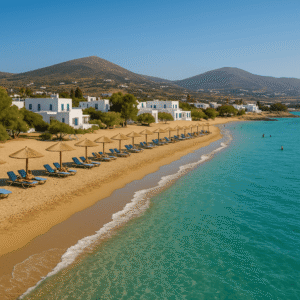
The Rethymno area on Crete’s north-central coast works particularly well for families with babies. The old town has some cobbled streets, but the beach promenade runs flat and smooth for several kilometres. The Rethymno Grecotel Creta Palace hotel near Rethymno beach offers shallow-entry pool sections suitable for babies and a medical centre on site. Rooms start at approximately 180 euros per night in peak season. For families preferring self-catering, the area around Platanias west of Chania has a Lidl, a pharmacy, and easy beach access from apartments starting at 90 euros per night.
Honest Challenges on Crete with a Baby
Crete’s main tourist resort areas, particularly Malia and Hersonissos on the north coast, prioritise nightlife and package tourism. They suit families with older children or teenagers but feel out of place for parents with infants. The noise, late-night activity, and crowded beach access make them poor choices for baby-led routines. Instead, the area west of Chania around Kalyves or Almyrida offers calm, shallow beaches, a relaxed pace, and proper local tavernas where babies genuinely receive a warm welcome.
Hiring a car on Crete is essential rather than optional if you want to explore beyond a single resort. Car hire including a child seat costs approximately 55 to 75 euros per day in peak season. Book the child seat in advance because availability runs short in July and August. Our guide to road tripping across Europe with a baby covers Greek car hire specifics, driving with rear-facing seats, and planning rest stops on longer drives.
Corfu with a Baby: Green, Gentle, and Genuinely Accessible
What Makes Corfu Particularly Suitable for Babies
Corfu sits in the Ionian Sea rather than the Aegean, which gives it a noticeably different character from the Cyclades. It is greener, the terrain is gentler in many areas, and the summer heat runs slightly lower than Santorini or Mykonos, averaging 28 to 32 degrees Celsius rather than 34 to 38. For parents concerned about heat management with a young baby, that difference matters more than it sounds.
The Kassiopi area in the northeast of Corfu suits families with babies particularly well. The village has calm, shallow beaches including Kalamionas and Avlaki, where the water stays sheltered and the gradient is gradual. Tavernas around the small harbour carry high chairs and welcome babies at all hours. The Kassiopi Estate villa complex nearby offers one and two-bedroom villas with private pools starting at approximately 200 euros per night in peak season, which gives babies a safe, shaded outdoor space throughout the day.
What to Watch Out For on Corfu
Corfu Town itself presents a genuine challenge for prams. The Venetian-era Liston and the old town lanes run on uneven flagstones and tight stairways. A carrier works far better than a pram for navigating the old town. Additionally, the main road through the island centre carries heavy traffic and moves at speed. Walking along it with a pram is uncomfortable and, in some stretches, unsafe. Stick to the coastal roads and village routes rather than the central artery.
Budget travellers find Corfu slightly more affordable than the Cyclades but not dramatically so in peak season. A mid-range restaurant meal for two adults costs 40 to 60 euros in the tourist areas. Local fish tavernas away from the waterfront run 25 to 40 euros for two. Supermarkets in Corfu Town stock Aptamil formula, Pampers, and Heinz baby food pouches, which is genuinely reassuring for parents who rely on specific brands.
Rhodes with a Baby: History, Beaches, and Practical Infrastructure
The Practical Advantages of Rhodes
Rhodes offers some of the best infrastructure of any Greek island for travelling families. The road network is well maintained, bus services cover the main tourist areas reliably, and the island’s size means you can reach very different environments, from the resort north to the quiet south, within a single day trip. Furthermore, Diagoras International Airport in Rhodes handles major European carriers including Jet2, TUI, and Wizz Air, giving families good direct flight options from UK and northern European cities.
The Lindos area, about 50 kilometres south of Rhodes Town, sits on a spectacular bay with a sandy beach that shelves gently into clear water. The beach at Lindos suits babies and toddlers well for its calm conditions. However, the village of Lindos itself sits on a steep hillside with hundreds of steps and no vehicle access. Carrying a baby up to the acropolis is achievable in a carrier but is physically demanding. Do not attempt it with a pram. Visit early morning before 9am if you go at all, as the afternoon heat in the narrow lanes is intense.
Best Areas to Stay in Rhodes with a Baby
Pefkos, a small resort south of Lindos, works well for families with very young babies. The beach is sandy and the resort is small enough to navigate without a car, with supermarkets and pharmacies within easy walking distance. The Pefkos Garden hotel offers family rooms with private terraces from approximately 120 euros per night and sits a three-minute walk from the beach.
In contrast, the northern resort strip around Faliraki targets young adult holidaymakers. It delivers noise, nightlife, and crowds that genuinely conflict with a baby’s sleep needs. Similarly, Rhodes Town’s old city delivers extraordinary medieval architecture but has the same cobblestone access problems as Corfu Town and Santorini. Visit for a morning, use a carrier, and return to your base before the midday heat peaks.
Naxos with a Baby: The Best Cycladic Option for Families
Why Naxos Stands Out in the Cyclades
Naxos ranks as the most practical Cycladic island for families with babies. It is larger than most of its neighbours, has a genuine agricultural economy that keeps food prices lower, and offers beaches that suit young children better than any other island in the group. Plaka Beach, a five-kilometre stretch of fine sand on the island’s west coast, remains one of the best family beaches in all of Greece. The water is shallow for a long distance, the sand is soft, and it rarely gets as overcrowded as the famous beaches of Mykonos or Santorini.
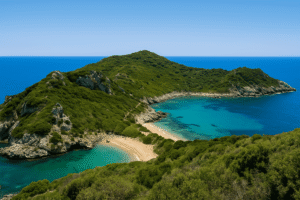
Moreover, Naxos Town (Chora) has a flat harbour area and a waterfront promenade that works well for prams. The small supermarkets in the old market sell nappies, wipes, and formula. The island’s medical centre in Naxos Town handles minor emergencies. For a Cycladic island experience without the price premium or the crowds of Santorini or Mykonos, Naxos delivers a genuinely satisfying alternative. Our guide to choosing the best travel strollers for different terrain types includes specific notes on Cycladic cobblestones and which stroller wheels handle them best.
Accommodation and Honest Limitations on Naxos
The Plaka Camping and bungalow area near Plaka Beach offers self-catering studios from around 70 euros per night, which suits budget-conscious families. For mid-range options, the Naxos Resort hotel near St George Beach charges approximately 140 euros per night for a double room with breakfast. St George Beach itself is close to Naxos Town and is very sheltered, which makes it another excellent option for babies.
The honest limitation of Naxos is transport. Inter-island ferries to Naxos from Athens (Piraeus) take four to five hours on the conventional Blue Star service. The fast catamaran cuts that to three hours but costs more and rides rougher. Additionally, bus routes on Naxos cover the main beaches but run infrequently. A hire car or scooter gives you far more flexibility, and a car with a child seat is essential if you want to reach the mountain villages or the south of the island.
Kefalonia with a Baby: Stunning but Requires More Planning
What Kefalonia Offers Families
Kefalonia delivers some of the most dramatic coastal scenery in the Ionian Islands, and it does so with fewer crowds than Corfu. The Myrtos Beach viewpoint, the Melissani Lake cave, and the Assos village harbour all offer genuine visual impact. Families who prioritise beautiful surroundings and a quieter atmosphere over resort-style convenience find Kefalonia genuinely rewarding.
The Lixouri peninsula on the western side of the island offers Xi Beach, a red-sand beach with calm, shallow water that suits babies well. The town of Lixouri has supermarkets, a pharmacy, and a relaxed local atmosphere. Self-catering apartments in Lixouri start at around 80 euros per night in peak season. A water taxi from Lixouri to Argostoli (the main town) runs every 30 minutes and costs 2 euros each way, which gives you access to the main shopping area without a drive.
The Real Challenges of Kefalonia with a Baby
Kefalonia requires a hire car. Without one, you are limited to your immediate base and the occasional expensive taxi. The island’s roads range from good to genuinely rough, and the hairpin bends approaching Myrtos Beach, while spectacular, demand careful driving. Furthermore, the famous Myrtos Beach itself has steep pebble access and strong waves. It photographs beautifully but does not suit babies or toddlers for actual swimming.
Flight options to Kefalonia are thinner than for Crete, Corfu, or Rhodes. From the UK, Jet2 and TUI operate direct summer routes, but they run fewer frequencies. Consequently, you have less flexibility on travel dates. Alternatively, flying to Athens and taking a domestic connection adds time and cost. For families with very young babies who prefer the simplest possible journey, Crete or Corfu may serve you better on the first trip. That said, Kefalonia rewards repeat visitors to Greece who want something beyond the standard resort experience.
What to Pack for a Baby in Greece
Sun Protection, Medical Essentials, and Beach Gear
Packing for a baby in Greece requires specific attention to sun protection. Babies under six months need UPF50 clothing that covers arms and legs, a wide-brimmed hat, and shade at all times between 10am and 4pm. Babies over six months can use mineral-based sunscreen on exposed skin. Bring your preferred brand from home, as Greek pharmacies carry limited ranges of baby-specific mineral sunscreens and charge significantly more than northern European supermarkets.
Pack a portable UV-blocking travel tent or beach shelter. Several lightweight options fold to the size of a large umbrella and provide shade for a baby on the beach without requiring any shade to already exist. This item transforms beach days with a young baby from stressful to genuinely enjoyable. Additionally, a good quality insect repellent safe for babies over two months (such as Mosi-guard Natural) belongs in the bag. Greek islands have mosquitoes in the evenings, particularly in wooded or coastal resort areas.
Prams, Carriers, and the Greek Terrain Problem
Greek island terrain tests most prams heavily. Cobbled old towns, sandy beach approaches, and uneven village streets defeat prams with small wheels or rigid frames. If you plan to use a pram on a Greek island holiday, choose one with large, air-filled tyres and good suspension. Our guide to choosing the best travel strollers covers models tested on cobblestones, sand, and steep gradients, with specific recommendations for Mediterranean island trips.
For most parents, a soft-structured carrier used alongside a lightweight umbrella stroller represents the most practical combination for Greece. The carrier handles the old town, the ferry gangplank, and the rocky path to the beach. The umbrella stroller covers the flat promenade and the supermarket. This combination takes up less luggage space than a full travel pram and covers more situations more comfortably.
In terms of other essentials, bring more nappies than you think you need for the first two days. Pharmacy nappies on smaller islands often cost 30 to 40 percent more than supermarket prices at home. Once you locate a large supermarket (Lidl and Sklavenitis are the most reliable chains on major islands), the prices normalise. Additionally, bring your usual Calpol or paracetamol suspension and an oral rehydration sachet (such as Dioralyte) for managing heat-related dehydration. These items exist in Greek pharmacies under different brand names, and deciphering packaging in Greek while your baby is unwell is not the ideal introduction to the language.
Timing Your Trip: Month-by-Month Advice
The Shoulder Season Case for May and September
May and September offer the most favourable conditions for travelling to Greece with a baby. Temperatures in May typically run 22 to 27 degrees Celsius, warm enough for beach days but genuinely manageable for a baby’s thermoregulation. The sea temperature in May averages around 20 degrees Celsius on most islands, which feels cool to adults but is safe for brief baby paddling. September brings still-warm sea temperatures of 24 to 26 degrees Celsius with air temperatures dropping back from the August peak.
Furthermore, shoulder season saves real money. Accommodation costs drop 25 to 40 percent compared to July and August. Flights cost less. Beaches carry half the peak-season crowd. Tavernas have time to actually engage with you and your baby rather than managing relentless table turnover. The honest trade-off is that some beach clubs, water sports operators, and tourist-facing businesses close or reduce hours in May and late September, particularly on smaller islands.
July and August: Managing the Peak Season Heat
July and August are the months most families choose, simply because school holidays align. Travelling with a baby in July or August is absolutely possible, but it requires a different daily rhythm. Plan outdoor activity for early morning (before 10am) and late afternoon (after 4pm). Keep midday hours for indoor rest, air-conditioned accommodation, and feeding. Avoid scheduling ferry crossings in the middle of the day when heat on open decks becomes intense.
Staying in accommodation with air conditioning is not optional in July and August. Even nights on Greek islands can stay above 25 degrees Celsius in these months, and a baby’s sleep suffers significantly without cooling. Always confirm that air conditioning works before you arrive, not after. Furthermore, keep a muslin cloth dampened with cool water available throughout the day for gentle cooling on a baby’s skin and neck.
Greece in spring and autumn also opens access to some genuinely worthwhile activities for adults travelling with babies who sleep reliably in a carrier. The coastal paths of Crete, the hiking trails of Kefalonia, and the bays of Corfu all reward slower, earlier-season exploration. For parents who love outdoor adventure and want to combine a baby-friendly base with adult activity, our guide to surfing spots across the Greek islands covers which beaches offer conditions for beginner and intermediate surfers, including those where one parent can surf while the other manages the baby on the beach.
Travelling with a baby changes how you experience Greece, but it does not diminish it. If anything, it slows you down enough to actually see things. You spend more time at a single taverna, more hours on one beach, more evenings watching the light change from a shaded terrace. Greek culture is built around exactly that kind of unhurried time. Babies, it turns out, travel on the same timetable as the locals. Plan carefully, choose your island with honesty about your baby’s needs, and Greece will deliver something that photos genuinely cannot capture.


Leave A Reply