

The Netherlands Is One of Europe’s Most Liveable Countries — and One of Its Most Quietly Demanding
The expat forums will tell you about the tulip fields, the cycling infrastructure, the efficient trains, the English-speaking locals, and the clean streets. All of that is true. What they tend to skip is the housing market that has broken people who came with good jobs and good intentions. The social culture that takes eighteen months to crack even slightly. The weather that is not merely rainy but specifically, relentlessly grey in a way that affects mood more than most people predict. The bureaucratic systems that function perfectly once you understand them and feel deliberately hostile until you do.
This guide is for people planning a long stay in the Netherlands — three months to a year or more — who want to understand what living there actually involves rather than what the tourism board and the optimistic Reddit threads suggest. It covers the country’s genuine strengths alongside its genuine frustrations, with specific attention to the smaller cities that most long-stay travellers overlook in favour of Amsterdam.
Why the Smaller Cities Matter for Long Stays
Amsterdam is an outstanding city for a weekend or a week. For a long stay of three months or more, it presents specific challenges: housing costs that rival London and Paris, tourist-to-resident ratios in the centre that make daily life feel performative, and a social scene so transient that building any continuity of relationship is difficult. The Netherlands’ real quality of life lives in its second tier. Haarlem, Leiden, Delft, and the areas around Zandvoort and Volendam offer the infrastructure and character of Dutch life without the Amsterdam premium or the Amsterdam noise.
Who This Guide Is For
This guide suits remote workers planning an extended stay, EU citizens considering a move, non-EU nationals on a Dutch orientation year or highly skilled migrant visa, and anyone spending more than four weeks in the country who wants to engage with it beyond the tourist surface. If you are planning shorter trips with family, our Disabled-Friendly Europe Guide covers accessibility across Dutch cities in detail, as the Netherlands consistently ranks among Europe’s most accessible travel destinations.
Table of Contents
- Housing: The Crisis Nobody Warns You About
- Haarlem: The City That Actually Delivers on the Promise
- Leiden: University Town With a Quiet Intensity
- Delft: Beautiful, Manageable, and Slightly Sleepy
- Zandvoort: If You Need the Sea to Function
- Volendam and the Waterland: Rural Netherlands Without Romanticising It
- The Social Culture: What Integration Actually Looks Like
- Bureaucracy, Registration, and the BSN Number
- The Weather: An Honest Account
- Cycling: The Thing They Get Right
- Food and Daily Life: Better Than the Reputation
- The Honest Verdict on a Long Dutch Stay
Housing: The Crisis Nobody Warns You About Loudly Enough
The Dutch housing market is in a state of sustained crisis that affects long-stay travellers directly and immediately. Rental vacancy rates in Amsterdam, Utrecht, and Haarlem sit below 1%. Waiting lists for social housing in Amsterdam run to fifteen years in some cases. Private sector rental prices have increased by 30% to 50% over the past five years in the major cities. This is not a temporary correction. It is a structural problem with no near-term resolution in sight.
What This Means Practically for Long-Stay Travellers
Finding a rental property in the Netherlands as a newcomer — without a Dutch employment contract, a Dutch guarantor, or an existing rental history in the country — is genuinely difficult. Landlords in competitive markets receive fifty to a hundred applications for each listing. They consistently select applicants with Dutch employment contracts and verifiable Dutch income over freelancers, remote workers, and international applicants with equivalent or higher earnings.
Furnished short-stay apartments exist and are the practical solution for the first one to three months of a long stay. Platforms like Spotahome, HousingAnywhere, and DirectWonen list furnished short-stay options across Dutch cities. Prices for a one-bedroom furnished apartment in Amsterdam run €1,800 to €2,800 per month. In Haarlem, the same apartment runs €1,400 to €2,000. In Leiden or Delft, €1,200 to €1,800. Zandvoort runs slightly below Haarlem. These are not cheap numbers by any European standard outside London and Zurich.
The honest strategy: use the first two months in a short-stay furnished apartment to build a local presence, open a Dutch bank account, establish a BSN number, and approach landlords as someone already in the country rather than someone applying from abroad. Every local letting agent confirms that applications from people already present in the Netherlands receive better treatment than equivalent applications from overseas. Plan the transition budget accordingly — the short-stay period is expensive but it is the cost of entering the market rather than a long-term fixed expense.
Which Cities Have Marginally More Breathing Room
Delft has more rental availability than Amsterdam or Haarlem, largely because its housing stock is larger relative to its population and its draw for international professionals is lower. Similarly, smaller cities in the province of Zeeland, Friesland, and parts of Gelderland have genuine availability at lower prices, but they require a specific lifestyle comfort with rural or small-town living that not everyone finds sustainable over a longer stay.
Rotterdam, often overlooked by long-stay travellers in favour of Amsterdam, has meaningfully more housing availability and lower prices despite being the Netherlands’ second largest city and its primary economic engine. A one-bedroom in Rotterdam’s centre runs €1,400 to €1,900 per month — lower than Amsterdam equivalents — and the city’s international and creative culture is genuinely strong. It deserves more attention from long-stay travellers than it receives.
Haarlem: The City That Actually Delivers on the Dutch Promise
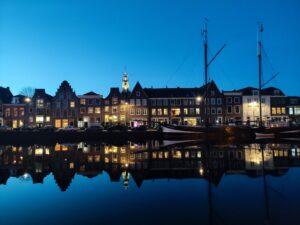
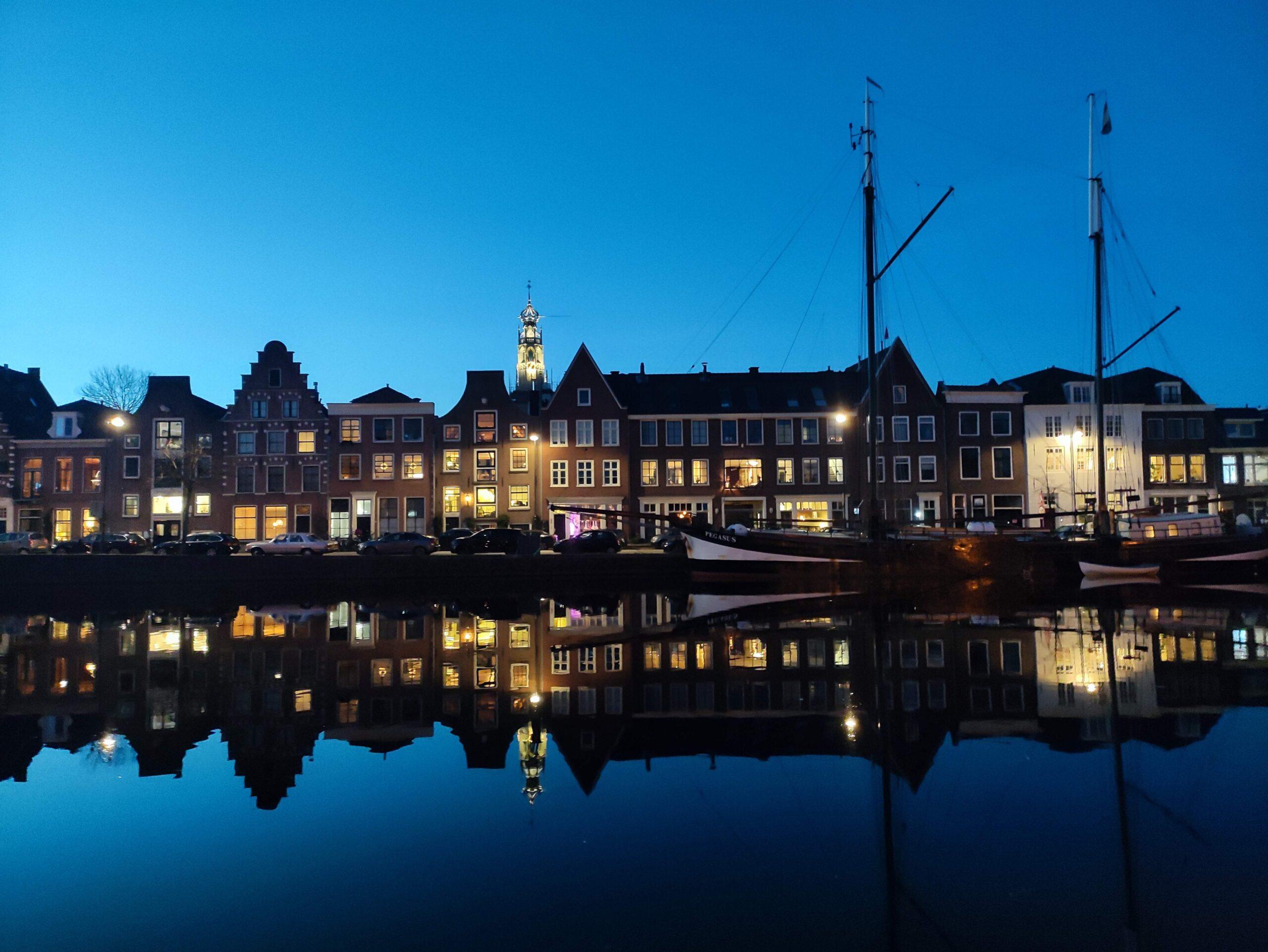
Haarlem sits 20 kilometres west of Amsterdam and fifteen minutes by train from Amsterdam Centraal. It has a medieval city centre that is better preserved than Amsterdam’s tourist-saturated equivalent, a cycling infrastructure that functions without the aggression of Amsterdam’s busier routes, and a residential character that gives daily life a texture the capital has largely lost to tourism and transience.
What Haarlem Does Well for Long Stays
The Grote Markt, Haarlem’s central market square, operates as a real local space rather than a tourist set piece. The Wednesday and Saturday markets sell proper food — local cheese, fresh fish from the North Sea coast, seasonal vegetables from Noord-Holland farms, flowers at prices that make buying them weekly a routine rather than a treat. The Frans Hals Museum, recently renovated, holds one of the strongest collections of Dutch Golden Age painting outside the Rijksmuseum and draws a thoughtful local visiting population rather than tour groups.
Restaurants in Haarlem hold up well against Amsterdam equivalents. ML Restaurant on Kleine Houtstraat holds a Michelin star and serves contemporary Dutch cuisine that uses North Sea produce and local dairy seriously. For daily eating, the Jopenkerk — a brewery installed in a former church on Gedempte Voldersgracht — serves reliable Dutch food alongside its own beers in a space that captures something genuinely characteristic of the city. Broodje Ben on the Grote Markt makes sandwiches that locals queue for, which is usually the most reliable quality signal in any Dutch city.
Haarlem’s cycling access to the North Sea dunes and the Kennemerduinen National Park is a meaningful quality of life advantage for anyone staying more than a few weeks. The dune landscape between Haarlem and Zandvoort is one of the more remarkable natural environments in the Netherlands — wide, relatively wild, and easily reached on a bicycle within thirty minutes from the city centre. It functions as a genuine pressure valve for urban density.
The honest limitation: Haarlem has a reputation among Dutch people as slightly smug about itself, and it is not entirely unearned. The city attracts a specific demographic of affluent Amsterdam escapees who have pushed prices up while expecting Amsterdam amenities in a smaller-city format. Some of the restaurant and retail scene reflects this — design shops and wellness studios rather than the functional variety of a working Dutch city. However, beneath that layer, Haarlem retains genuine local character that rewards patient exploration.
Leiden: University Town With a Quiet Intensity
Leiden is forty kilometres southwest of Amsterdam and thirty minutes by train. It is best known internationally as the birthplace of Rembrandt and home to one of Europe’s oldest universities, founded in 1575. For long-stay travellers, these facts matter less than the practical reality: Leiden is a genuine working university city with a year-round intellectual energy, a canal network arguably more beautiful than Amsterdam’s, and a local population that is demographically younger and more socially open than most Dutch cities its size.
Living in Leiden as a Long-Stay Traveller
The university presence makes Leiden more internationally accustomed than comparable Dutch cities. English is spoken universally, international networks exist across multiple disciplines and communities, and the city has institutions — international schools, international medical practices, English-language community groups — that support a longer-term international presence. This infrastructure matters when you are trying to establish a functional daily life rather than just passing through.
The Leiden Bio Science Park, adjacent to the university, has drawn significant pharmaceutical and biotech investment and creates an ongoing stream of international professionals in the city. Consequently, the rental market has some international-facing stock, which slightly eases the access problem that pure tourist destinations face. Several landlords near the Bio Science Park are accustomed to renting to international professionals on fixed-term contracts.
Naturalis Biodiversity Center, recently expanded with a new wing, is one of the best natural history museums in Europe and a legitimate reason to spend an afternoon rather than just a passing hour. The Rijksmuseum van Oudheden — the national antiquities museum — holds an Egyptian temple transported stone by stone from its original location and reassembled in the museum atrium. These are not tourist traps. They are serious institutions that reward the kind of extended engagement that a long stay makes possible.
The honest limitation: Leiden’s city centre is genuinely beautiful but its immediate surroundings are ordinary Dutch suburban development that lacks the character of the centre. If your accommodation is outside the canal ring, daily life becomes less charming quickly. Prioritise central accommodation even at higher cost, as the difference in daily experience justifies it significantly.
Delft: Beautiful, Manageable, and Slightly Sleepy in the Best and Worst Ways
Delft is the Netherlands in a compact, legible form. The Markt with the Nieuwe Kerk and the town hall facing each other across a wide square. The canal network running precisely through a medieval grid. The distinctive blue and white Delftware pottery visible in every tourist shop and in the genuine Royal Delft factory on the edge of town. It is, in terms of Dutch aesthetic completeness, about as close to the postcard as any Dutch city gets.
Delft for Long Stays: The Practical Assessment
Delft functions well as a long-stay base for several specific reasons. Technische Universiteit Delft — one of Europe’s leading technical universities — gives the city a significant international student and researcher population that keeps it from being purely a tourist-and-retiree proposition. The TU Delft campus is striking architecturally, with several buildings by Dutch and international architects worth the short cycle from the centre.
The city sits precisely between The Hague and Rotterdam on the train line, with each city reachable in twelve to fifteen minutes. This gives Delft-based long-stay travellers access to The Hague’s international institutions — the International Court of Justice, the International Criminal Court, multiple international organisations with associated expat communities — and Rotterdam’s economic and cultural weight, without paying either city’s accommodation premium.
Day-to-day life in Delft is quiet by Dutch urban standards. The city is small enough to know on foot within a few weeks. Restaurant quality is solid but limited in range — De Kurk on Voldersgracht does excellent contemporary Dutch cooking, and Stads-Koffyhuis near the Markt is the oldest cafe in town and still earns its place. However, the dining scene does not match Haarlem’s or Leiden’s depth. For serious restaurant exploration, the fifteen-minute train to Rotterdam is the practical solution.
The honest limitation that expat forums rarely state directly: Delft can feel very small after three months. Its compactness is an asset in the first weeks and a mild constraint by the third month. The social scene is narrower than Leiden’s or Haarlem’s. If you need a sustained variety of cultural events, new social environments, and regular stimulation from the city itself, Delft requires more deliberate effort to supplement what the city provides naturally.
Zandvoort: If You Need the Sea to Function
Zandvoort is not a city in any meaningful sense. It is a seaside resort town of approximately 17,000 people on the North Sea coast, twenty-five minutes by train from Amsterdam Centraal and fifteen minutes by bicycle from Haarlem. For most of the year it functions as a quiet, slightly faded resort with a permanent population that outnumbers the tourist infrastructure by a comfortable margin. In July and August it becomes an extension of Amsterdam’s beach, filling with day-trippers to a degree that makes living there temporarily exhausting.
Why Some Long-Stay Travellers Choose Zandvoort
The North Sea beach at Zandvoort is eleven kilometres long, wide, and backed by the dune landscape that stretches into the Kennemerduinen National Park. Outside of the peak summer weeks, it is a genuinely restorative place to spend extended time — the scale of the beach absorbs people, the dune walking is excellent, and the North Sea light in autumn and winter has a particular quality that painters and photographers have found worth pursuing for centuries.
Accommodation costs in Zandvoort run meaningfully below Haarlem despite the proximity. A one-bedroom apartment in Zandvoort rents for €1,100 to €1,500 per month in most of the year, with premium pricing during the Formula One Dutch Grand Prix weekend in August, when the Circuit Zandvoort draws international crowds and short-stay prices triple overnight. If your long stay includes that August window, either negotiate your rental terms specifically or plan around the disruption.
The honest assessment: Zandvoort works best for long-stay travellers who have a specific reason to want coastal access — writers, artists, people recovering from something, people who need to walk on a beach regularly to feel like themselves. It works less well as a general base for someone who needs urban stimulation and social variety. Haarlem’s cycling distance makes Zandvoort supplementary to a Haarlem base rather than an alternative to it, and many people find that arrangement — city living with sea access thirty minutes away — the optimal configuration.
Volendam and the Waterland: Rural Netherlands Without Romanticising It
Volendam sits on the IJmeer, the inland lake northeast of Amsterdam, and it is honest to say upfront that its current reputation is primarily as a day trip destination for tourists who want to photograph people in traditional Dutch costume and buy smoked eel. That tourist layer is real and it is pervasive in the village centre. However, the broader Waterland region around Volendam — the flat, poldered agricultural landscape of Marken, Broek in Waterland, Monnickendam, and Edam — offers something genuinely different from anywhere else in the Netherlands.
The Waterland for Long Stays: A Specific Kind of Reward
The Waterland landscape is unlike the rest of the accessible Netherlands. It is flat in a particular way — reclaimed from the sea, crossed by canals and drainage ditches, populated by black and white cows, herons, and a seemingly unreasonable number of migratory birds in spring and autumn. Cycling through it in early morning before the Amsterdam day-trippers arrive is an experience of genuine Dutch landscape that the urban centres cannot replicate.
Edam, six kilometres from Volendam, is a more liveable base than Volendam itself. It has a weekly cheese market that functions as a real market rather than purely a tourist performance, a canal-side character that is less overrun than Volendam’s harbour front, and accommodation options including several characterful guesthouses and vacation rental apartments that suit week-long or month-long stays. Prices are lower here than anywhere within comparable Amsterdam proximity.
The honest limitation: the Waterland requires a car or consistent cycling commitment for practical life. Public transport connections are limited outside of direct Amsterdam routes. Supermarkets, medical facilities, and the daily infrastructure of Dutch life require either a bicycle journey or a car trip for most errands. This is manageable and for some people the right trade for the landscape and the quiet, but it should not be romanticised as a lifestyle equivalent to city living. It is rural Netherlands — beautiful, specific, and demanding of self-sufficiency.
The Social Culture: What Integration Actually Looks Like
Dutch social culture is the aspect of long-stay life in the Netherlands that trips people up most consistently, and the expat forums handle it in one of two ways: either they deny the difficulty entirely (“Dutch people are so direct and friendly once you get to know them!”) or they catastrophise it (“Dutch people are impossible to know and you will be lonely forever”). The honest reality sits between those positions, and it is worth understanding precisely.
The Dutch Social Structure and Why It Is Hard to Enter
Dutch social life organises itself around long-term relationships — school friendships maintained into middle age, neighbourhood networks built over decades, sports clubs and associations that function as social infrastructure for their members. These networks are warm, loyal, and stable. They are also effectively closed to newcomers because they do not need to expand. Dutch people already have their social lives fully populated.
This is not unfriendliness. Dutch people are direct, helpful in practical terms, and genuinely welcoming in professional and functional contexts. A Dutch colleague will help you navigate the bureaucracy, recommend a good bike shop, and explain the public transport system with patience. The same person will not automatically invite you to their birthday party or introduce you to their wider social circle, because those spaces are not configured for expansion in the way that more transient social cultures are.
Integration takes longer than most people expect and involves different mechanisms than in more socially porous cultures like the UK, Australia, or the United States. Sport clubs — particularly cycling clubs, rowing clubs, and football associations — function as the most reliable social entry point because participation creates repeated, structured contact over time, which is how Dutch friendships form. Dutch language classes similarly create social bonds through shared effort. Neighbourhood associations, volunteer work, and regular presence in the same local cafe or market over several months all contribute to a slow accumulation of recognition that eventually becomes something warmer.
The honest timeline: meaningful social integration in the Netherlands takes twelve to eighteen months of consistent effort. People who stay six months and leave feeling the Dutch were cold were not wrong about their experience. They simply left before the curve bent.
Bureaucracy, Registration, and the BSN Number
The Dutch administrative system rewards people who engage with it correctly and punishes those who try to exist outside it. The BSN — Burgerservicenummer, the Dutch citizen service number — is the central administrative identity in the Netherlands. Without it, you cannot open a Dutch bank account, access the healthcare system properly, sign a rental contract, or receive any form of Dutch government service. Getting it is the first practical priority of any long stay.
How to Get Your BSN as a Non-Resident
EU citizens staying more than four months must register at the municipality where they live — the gemeente. Registration requires a valid passport, proof of address in the Netherlands (a rental contract or a letter from a host confirming your stay), and a completed registration form. The gemeente issues a BSN at registration, usually within a few days.
Non-EU citizens require a valid visa before arriving, issued by the Dutch immigration service (IND). The highly skilled migrant route — the kennismigrant visa — requires a sponsoring employer registered with the IND. The orientation year visa (zoekjaar) allows recent graduates from highly ranked international universities one year to find work in the Netherlands without a job offer first. Both routes require advance planning and processing time of four to twelve weeks depending on circumstances.
The non-resident registration option at certain municipalities — primarily The Hague and Amsterdam — allows short-stay visitors who need a BSN for specific purposes (opening a bank account, completing a property purchase) to obtain one without full residency registration. This route is legitimate but requires an appointment, documentation, and awareness that the non-resident BSN has more limited function than a full resident registration BSN.
The honest practical note: appointment availability at municipality offices is limited and booking slots fill weeks in advance in Amsterdam and Haarlem. Book your gemeente appointment before arriving in the Netherlands, not after. Several municipalities now offer online appointment booking in English. Use it immediately upon confirming your Dutch address.
The Weather: An Honest Account That Goes Beyond “It Rains a Lot”
The Netherlands receives approximately 760 millimetres of rainfall per year — less than London’s 601mm, actually, by annual total. The difference is not the quantity of rain. It is the distribution and the character. Dutch rain falls lightly and frequently rather than heavily and occasionally. More significantly, the cloud cover is persistent. The Netherlands averages approximately 1,700 sunshine hours per year compared to London’s 1,600 — similar totals, but the Dutch winter concentrates the darkness more intensively between October and February.
What the Winter Actually Does to People
From November through February, the Netherlands experiences a specific combination of conditions that many people from sunnier climates find genuinely difficult: temperatures of 2°C to 8°C, persistent low cloud that eliminates blue sky for weeks at a time, wind off the North Sea that has no natural barrier between it and your face, and days that run from roughly 8am to 4:30pm in December. The functional daylight window is narrow, and the grey is comprehensive rather than intermittent.
Seasonal affective disorder is real and measurable in the Netherlands. Dutch employers are accustomed to it — several Dutch companies provide light therapy lamps as standard office equipment, which tells you something about the accepted normalcy of the problem. A SAD lamp is a worthwhile purchase before the first Dutch October. A Vitamin D supplement is standard medical advice from Dutch GPs for anyone spending a full winter in the country.
The counterpart is that Dutch spring arrives with genuine force. When the light returns in March and April, the tulip fields bloom across the bulb region between Haarlem and Den Haag, the outdoor cafe culture reasserts itself almost immediately, and the country undergoes a mood shift that is as dramatic as the winter’s descent. People who survive a Dutch winter often find the spring more vivid and more appreciated than anywhere they have previously lived. That is a genuine reward, but it requires getting through the winter first with appropriate preparation and honest expectation-setting.
Cycling: The Thing the Netherlands Genuinely Gets Right
Every article about the Netherlands mentions cycling. Most understate it. The Dutch cycling infrastructure is not merely good by European standards — it represents a fundamentally different conception of urban movement that changes daily life in ways that are difficult to fully appreciate until you live inside it.
What Cycling Infrastructure Actually Changes
In the Netherlands, a bicycle is not a recreational object or a fitness tool. It is primary transport infrastructure, taken as seriously as roads and trains. Cycle paths are separated from traffic by physical barriers, not paint lines. They are maintained in winter. They carry cargo bikes, elderly people, children in bakfiets seats, people in suits carrying briefcases, and every demographic simultaneously. The result is that distances of up to fifteen kilometres feel genuinely practical as a daily commute in a way that cycle commuting in most European cities does not.
For long-stay travellers, the cycling infrastructure changes the accessible geography significantly. From Haarlem, the North Sea coast at Zandvoort is thirty minutes. The tulip fields south of Haarlem are forty-five minutes. Amsterdam is fifty minutes to one hour on a pleasant route through the polder landscape. Leiden from Haarlem is ninety minutes on established cycle routes. These distances feel natural to Dutch cyclists and feel achievable within a few weeks to most visitors who engage with them genuinely.
Buy a second-hand Dutch oma fiets — the classic upright Dutch bike — from a local market or Marktplaats (the Dutch equivalent of eBay) for €80 to €150 rather than renting. The second-hand market is large, the bikes are robust, and owning rather than renting allows you to use the bike as a storage point for locks, panniers, and lights without worrying about rental return conditions. Lock it with two locks minimum — a frame lock and a heavy chain lock — and park it in designated cycle parking areas rather than against lampposts, which in some municipalities results in removal.
Food and Daily Life: Better Than the Reputation Suggests
Dutch food has a poor international reputation that is partly historical and partly fair. The traditional Dutch diet — stamppot, erwtensoep, bitterballen, herring, stroopwafels — is honest, filling, and lacks the sophistication of French or Italian equivalents. However, the Netherlands’ long history as a trading nation and its current multicultural population have produced a food scene in the major cities that significantly exceeds the traditional cuisine’s reputation.
Where the Food Is Actually Good
Indonesian food in the Netherlands is outstanding and available everywhere, a legacy of the colonial relationship with Indonesia. A rijsttafel — a spread of small Indonesian dishes served with rice — is one of the genuinely great eating experiences available in Dutch cities, and even mid-range Indonesian restaurants in smaller cities like Leiden and Haarlem do it well. Blauw in Utrecht and Kantjil en de Tijger in Amsterdam are frequently cited, but neighbourhood Indonesian restaurants in any Dutch city tend to be reliable.
The Dutch cheese market is a legitimate reason to engage seriously with local food. Gouda and Edam in their aged forms — old (oud) and extra-old (extra belegen) — are nothing like the young versions exported abroad. A piece of extra belegen Gouda from a local kaaswinkel has crystalline texture, deep caramel flavour, and complexity that puts most supermarket cheese to shame. Buy it from a dedicated cheese shop rather than a supermarket, and buy it in small quantities often rather than large amounts that sit in the fridge.
Stroopwafels eaten fresh from a market stall, placed over a hot coffee to warm the caramel filling, are worth the caloric investment. Poffertjes — small, fluffy buckwheat pancakes served with butter and powdered sugar — are a legitimate daily breakfast food rather than a tourist novelty. Fresh North Sea herring eaten from a street stall, held by the tail and lowered into your mouth with raw onion and pickle, is the correct way to eat it and it is excellent when the herring is fresh.
Supermarkets in the Netherlands are reliable and well-stocked. Albert Heijn is the dominant chain and is consistently good. Jumbo is the main competitor with strong fresh produce. Both carry sufficient international food ranges that cooking from other culinary traditions is straightforward in any Dutch city of reasonable size.
The Honest Verdict on a Long Dutch Stay
The Netherlands rewards long-stay travellers who arrive with accurate expectations, practical preparation, and genuine curiosity about Dutch life rather than a desire to replicate another life in a Dutch setting. It is a country that functions at a high level in most practical domains — infrastructure, healthcare, public safety, environmental quality — and functions at a frustrating level in others, specifically housing access and social integration timelines.
Haarlem is the strongest overall base for most long-stay travellers: close enough to Amsterdam for access without Amsterdam’s costs and tourist density, beautiful enough to sustain daily engagement, connected enough by train and bicycle to reach the rest of the country efficiently. Leiden suits people who want a university-town intellectual atmosphere and proximity to The Hague’s international institutions. Delft suits people who want quiet beauty and don’t need a varied social scene to feel satisfied. Zandvoort suits people who need the sea in their daily geography. The Waterland around Volendam and Edam suits people who want genuine rural Dutch landscape and are prepared for the self-sufficiency it requires.
None of these places will give you everything. The Netherlands is a country that offers a great deal and withholds a few specific things — warmth on contact, easy housing, consistent sunshine — for longer than most visitors expect. The people who love it are those who came prepared for the withholding and stayed long enough for the giving to reveal itself. That is a reasonable deal. It is simply one worth understanding clearly before you commit to it.


Leave A Reply